Making Pop Music: How to Write, Produce, and Finish a Pop Song


Making pop music means combining a memorable melody, emotionally direct lyrics, and polished production into a song built to connect with the widest possible audience. It requires balancing simplicity with substance — a hook that sticks, a structure that rewards attention, and production that sounds polished without losing character. This is genuine craft, and a genuinely great pop song is one of the hardest things to pull off in any creative field.
This guide walks you through how to make pop music from the ground up — what defines pop as a genre, how structure, hooks, lyrics, chords, tempo, and rhythm all work together, and how a production workflow brings it all to a finished track. The information here is practical and applicable at any stage, from a first sketch to a polished demo.
In this article, you will learn:
What separates pop-the-genre from popular music in general
How the structure of a pop song works as emotional engineering, not just a template
What makes a hook stick and how to build one deliberately
How to approach pop melody writing with intention
The craft of writing pop lyrics that are emotionally resonant
Why certain chord progressions dominate the pop canon and what they do emotionally
How tempo and rhythm shape a song's physical feel
How to develop your own production workflow geared toward actually finishing tracks
What Is a Pop Song Actually?
Before you start creating pop music, it helps to get clarity on what the term "pop" actually means — because it is used in two very different ways.
Pop as a genre has specific traits: melodic focus, verse-chorus architecture, lyrical accessibility, and polished production. These are songs built around singable melodies and emotional directness. If we're talking about the present day, the names that define this space include Dua Lipa, The Weeknd, and Billie Eilish — artists whose work is shaped by those structural and sonic qualities regardless of what else is charting at any given moment.
Popular music as a characteristic is something else entirely. It's whatever is topping the charts right now, and today that pulls from hip-hop, Latin music, R&B, electronic, indie, and everything in between. A viral drill track dominating Spotify is popular music, but it isn't necessarily pop-the-genre.
The two overlap constantly — a Dua Lipa single is both. But they aren't synonyms. Understanding this distinction matters because when we talk about how to make pop music, we're talking about specific craft principles, not just chasing whatever's trending this week. Contemporary pop music absorbs influences from everywhere, but the genre's core identity — melody-first, emotionally direct, structurally tight — has remained remarkably consistent for decades.
The pop music genre also traditionally carries a reputation it doesn't really deserve. There's a persistent idea that pop is "simpler" or less serious than other genres. The reality is the opposite: writing something that sounds effortless and connects with millions of people is an extraordinarily difficult skill. The best pop songwriters — people like Max Martin, who has written more number-one hits than almost anyone in history — are among the most technically skilled composers working today.
Pop Song Structure: Emotional Engineering
Pop song structure isn't a formula you can just follow robotically. It's a set of tools for managing the listener's emotional experience across three to four minutes.
The standard framework — verse, pre-chorus, chorus, verse, pre-chorus, chorus, bridge, final chorus — exists because each section has a function:
Verse: builds context and tension. Sets a scene, tells you something, makes you lean in.
Pre-chorus: the ramp. Raises energy and creates anticipation for what's about to hit.
Chorus: releases and rewards. This is the emotional payoff the verse earned.
Bridge: disrupts comfort. By the time you've heard the chorus twice, your brain is settling in. The bridge introduces something genuinely different — new melody, different chords, shifted perspective — so the final chorus hits with renewed force.
Outro: brings the song to a close, sometimes with a final hook repetition, sometimes by stripping elements away.
A verse in a pop song typically runs 8 to 16 bars. A chorus is usually 4 to 8 bars, the bridge — 4 to 8 bars. These aren't arbitrary numbers — they reflect how long attention and anticipation can sustain before they need to be paid off or refreshed.
Not every pop song follows this blueprint exactly. Billie Eilish's "bad guy" barely has a traditional chorus. The Weeknd's "Blinding Lights" uses a relatively straightforward verse-chorus structure but adds an instrumental post-chorus that becomes the song's signature moment. Taylor Swift frequently extends her bridges into emotional climaxes that rival the chorus itself.
The key principle: each section exists to do something to the listener's experience. If a section doesn't build tension, release it, or refresh attention, it doesn't belong in the song. That kind of economy is what separates a tight pop song from a track that loses people halfway through.
Pop Hooks: Why You Can't Get Them Out of Your Head
A pop song hook is the part people remember, hum, and can't shake. But hooks aren't just choruses — they can live in a riff, a vocal ad-lib, a rhythmic pattern, or even a single standalone sound. The synth line in "Blinding Lights" is a hook. The whispered vocal in Billie Eilish's "bad guy" is a hook. The "oh-oh-oh" in Taylor Swift's "Shake It Off" is a hook.
Most hooks are built from some combination of these three types of elements:
Melodic — note intervals and a singable contour. That leap to a high note that makes you catch your breath. A wider interval jump at a well-chosen moment often makes a hook more memorable, though there's no guaranteed formula for it.
Rhythmic — syncopation and unexpected emphasis. A vocal rhythm that sits slightly against the beat, which tends to create a feeling that's both surprising and inevitable. This works precisely because the underlying pop music beat is steady and predictable — the hook's syncopation only registers as surprising when there's a stable pulse to push against.
Lyrical — a feeling compressed into a quotable phrase, something that sounds like it's always existed. "We found love in a hopeless place" is seven words that say more than a whole verse of abstract language could.
A real, functional pop song hook — the kind that lodges in someone's brain — usually combines at least two of those three. A melody that jumps to a surprising interval, lands on an emotionally loaded phrase, and delivers it with a rhythmic pattern you can't ignore. That combination is what gives a hook its sticking power. One element alone can work, but two or three together is where hooks tend to become inescapable.
Repetition does the rest — not because listeners are simple, but because the brain genuinely rewards pattern recognition. A hook works when hearing it again feels like a gift rather than a chore. The trick is treading the fine line between "satisfying repetition" and "annoying repetition," and one of the factors that seems to matter most is how much variation you introduce around the hook each time it appears. Slight changes in arrangement, such as backing vocal layering, or meaningful harmonic context shifts can keep the repetition feeling fresh.
Writing a Pop Melody: Where Instinct Meets Intention
Melody is the heart of pop music. Understanding how to write a pop song melody — one you can sing back after hearing it just once or twice — is essential, and that kind of memorability isn't random. It's built on principles that you can learn to apply deliberately, even if much of the work still comes from instinct.
Keep the range singable. Most effective pop melodies stay within about an octave and a half. This isn't a limitation — it's a feature. A melody that a non-singer can hum along to in their car has a much wider reach than one that requires vocal acrobatics. Dua Lipa's biggest hits tend to sit in a comfortable midrange. The Weeknd's "Blinding Lights" rarely pushes beyond a ninth.
Use stepwise motion with strategic leaps. Music theory and perception research (going back to work by Leonard Meyer and more recently explored in David Huron's Sweet Anticipation) suggest that the most memorable melodies tend to move mostly in steps — adjacent notes — and then surprise the listener with a larger interval jump at a key emotional moment. That leap, often a fourth, fifth, or octave, is what tends to give a melody its moment of lift. This isn't folk wisdom or a lifehack — it's one of the most well-documented patterns in musicology of how memorable melodies actually work.
Repetition with variation. A pop melody often introduces a short melodic phrase, repeats it (sometimes with a slight change), and then resolves or develops it on the third or fourth pass. This "statement — restatement — development — resolution" pattern works because it balances predictability with surprise. The listener gets enough repetition to feel anchored, and enough variation to stay engaged.
Let rhythm drive the melody. In modern pop music, the rhythm of the vocal line is often more distinctive than the pitch content. Syncopated phrasing — where syllables are placed slightly before or after the expected rhythmic position — gives a melody its own personality. Listen to how Dua Lipa phrases her verses: the notes aren't complex, but the rhythmic placement is what makes them feel distinctive.
Writing Pop Lyrics That Actually Say Something
Pop song lyrics at their best aren't shallow. They're efficient. A pop lyric has roughly three minutes to make you feel something, and it can't waste a single line getting there.
The craft comes down to a few core principles:
Conversational language. The kind of phrasing that sounds like someone actually talking, not performing. If a line sounds awkward said aloud to a friend, it will sound awkward sung.
Concrete over abstract. "Dancing in the kitchen at midnight" lands harder than "feeling joy in everyday moments." Specificity creates emotional resonance; vagueness creates nothing.
Emotional directness without being obvious. Say what you mean, but say it in a way the listener discovers rather than gets told. This is, of course, easier said than done.
Repetition as emphasis, not laziness. The chorus lyric repeats because it earns repetition — it's the emotional core. But if a phrase repeats without carrying weight, it just sounds empty.
A real artist is impossible to boil down to a formula. But we can look at how some of today's top artists model different approaches to how to write pop song lyrics. Taylor Swift's strength is narrative precision — she builds scenes with specific characters and details that somehow feel universal. "I knew you were trouble when you walked in" sets a scene, establishes a point of view, and delivers a hook in a single line. The Weeknd works in atmosphere: impressionistic, sensory, deliberately hazy, painting a mood rather than telling a story. Billie Eilish flips the volume expectation entirely, whispering confessional lyrics that pull you in by making you lean closer.
Each of these approaches is a real pop songwriting craft you can study and try yourself. The common thread is that every word is doing work. No filler, no placeholder lines, no "this sounds nice but doesn't mean anything" padding.
One practical pop songwriting tip: sing every line out loud before you commit to it. A lyric that reads well on paper can feel completely wrong in the mouth — awkward syllable stress, unnatural breath points, a vowel sound that fights the melody. Your body will flag problems your eyes won't catch. And if a line doesn't survive being sung, it doesn't matter how clever it looks written down. Don't get attached to lines just because you worked hard on them and cut ruthlessly what doesn't work.
Chord Progressions: Just Enough Theory to Understand Why Pop Feels the Way It Does
Pop music chord progressions deserve a section, but we'll keep it brief — because the magic isn't in knowing the theory, it's in hearing what the chords do emotionally.
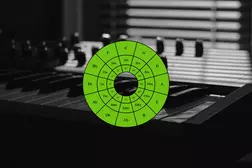
The progression I–V–vi–IV (in the key of C: C major, G major, A minor, F major) underpins a staggering percentage of the pop canon. It works because it moves between resolution and tension, home and longing, brightness and that bittersweet minor chord, in a cycle that feels both satisfying and perpetually unfinished. This already classic piece of musical comedy by the Australian act Axis of Awesome demonstrates it better than any textbook — they play dozens of hit songs seamlessly using only this progression.
Other common pop music chord progressions include:
vi–IV–I–V: starts on the minor chord, creating a more melancholic feel. Common in emotional ballads and darker pop.
I–IV–V–I: the classic resolution cycle, used across decades from the 1950s to today.
I–V–vi–iii–IV: an extended version that adds the iii chord for a moment of unexpected warmth before resolving.
The point isn't to memorize roman numerals. It's to understand that chord choices create specific emotional shapes. Even the simplest progression is doing emotional work — setting up expectations, satisfying or subverting them, pulling the listener through a feeling. You don't need to master theory. You need to hear what each movement does and choose accordingly.
Max Martin — the Swedish songwriter-producer behind hits for Taylor Swift, The Weeknd, Katy Perry, and Ariana Grande just to name a few — is known for his sophisticated harmonic sense underneath seemingly simple pop surfaces. His chord choices sound obvious in retrospect, but the specific voicings and movements he selects are anything but random.
Tempo, Rhythm & the Pop Beat
Pop song tempo generally sits between 90 and 150 BPM, with most contemporary hits clustering in the 100–130 range. Where your track lands in that range changes its entire physical character.
Around 100 BPM, you get a relaxed, body-sway groove — the kind of tempo that invites movement without urgency. Billie Eilish's quieter tracks often sit here, and the effect is intimate and unhurried. Push toward 120 BPM and you're in driving, energetic territory — this is where most dance-pop and uptempo radio hits live. Go above 125 and you're leaning into club-adjacent energy. Ballads and downtempo pop typically fall in the 70–90 BPM range, creating space for vocal performance and emotional weight.
If you're less familiar with how BPM translates to feel, here are some reference points from well-known pop songs:
"Blinding Lights" by The Weeknd registers at 171 BPM, though it feels closer to 85 because of its half-time rhythm — that tension between a fast pulse and a slow groove is what gives the track its urgent but hypnotic quality.
"Levitating" by Dua Lipa runs at 103 BPM — just above the threshold where a midtempo groove starts to feel like it's actively pulling you to move, which is why the song feels breezy and danceable without being frantic.
"bad guy" by Billie Eilish comes in at 135 BPM, but the sparse, laid-back arrangement makes it feel slower than it is — proof that production and rhythm choices can override raw tempo entirely.
The takeaway: BPM sets the physical pulse, but arrangement, rhythmic density, and half-time or double-time choices determine how fast a song actually feels. Tempo is a starting condition, not a destination.
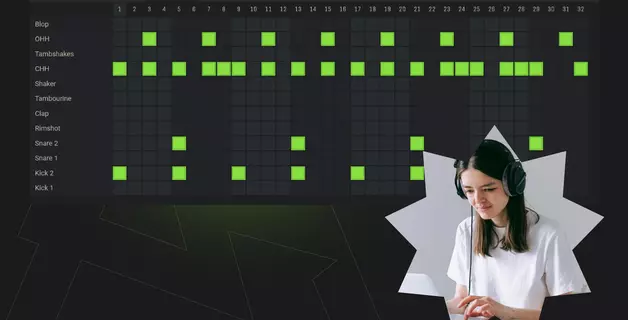
Pop rhythms tend toward steadiness — a simple kick pattern, claps or snares that mark the backbeat on two and four, and hi-hat or percussion that add texture without cluttering the arrangement. As for the drum sounds themselves — there are hardly any limits nowadays. Current studio production freely blends acoustic and electronic rhythmic sources, and it's this hybrid approach that lets pop music beats translate across the multitude of songwriting and arranging approaches and genre elements borrowed from basically anywhere you can imagine.
Producing Pop Music: From Idea to Finished Track
Pop music production is where all the elements above become a finished piece of music. The producer's job at this level isn't just technical — it's architectural. You're making decisions about what the listener hears, when they hear it, and how each moment connects to the next.
Start with the Hook
Most successful pop production starts with the strongest element: the hook. Whether that's a vocal melody, a synth line, or a chord progression that feels just right, build outward from the moment that matters most. Everything else in the arrangement exists to support and amplify that central idea.
Build the Arrangement as Storytelling
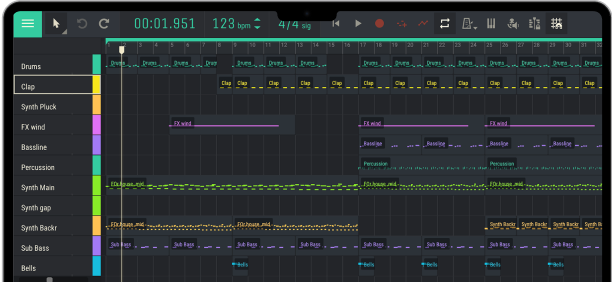
Pop song arrangement is storytelling. What enters when, what drops out, and how the track builds across its runtime are creative decisions, not just technical ones. A great pop arrangement never plays all its cards at once. Here's an example structure template that illustrates this idea:
Verse 1: sparse — vocals, a pad, minimal beat. Sets the scene.
Pre-chorus: energy starts building — a new element enters, the bass gets more active.
Chorus 1: full arrangement hits. All the layers are present.
Verse 2: pulls back, but not as far as verse 1. Introduces something new — a counter-melody, a different rhythmic element — to keep interest.
Chorus 2: hits harder than chorus 1, maybe with added backing vocals or a richer arrangement.
Bridge: makes a turn to something unexpected. Creates contrast.
Final chorus: everything, plus something extra you've been holding back.
This depth of dynamic control is what separates a good demo from a hit record. It's a skill you can develop by studying great arrangements closely — pick a pop song you love, listen on headphones, and map out exactly what enters and exits at each section.
Learn from the Best
Like the elusive architect of modern pop arrangement Max Martin, the Swedish songwriter-producer responsible for more chart-topping hits than almost anyone alive. Martin essentially systematized the craft of pop production — what he calls "melodic math" — combining rhythmic precision with arrangement as emotional engineering. It's an approach closer to architecture than spontaneous inspiration, and it's behind a staggering number of the songs you may already know by heart.
Mixing and Finishing
Once your arrangement is in place, the mixing stage shapes how every element sits in the final track. Pop mixing tends toward clarity and separation — each element occupies its own space in the frequency spectrum and stereo field, with the vocal sitting front and center. Compression, EQ, and spatial effects (reverb, delay) are the primary tools, and the goal is always to serve the song rather than show off the processing.
Tools and Getting Started
If you're wondering how to produce pop music on a practical level, the barrier to entry is lower than it's ever been. What once required a professional studio and expensive equipment now happens on a laptop. You need a DAW (digital audio workstation) with virtual instruments, audio recording, and basic effects processing. If you want to start applying what you've learned in this guide without installing anything, Amped Studio runs entirely in your browser — open it, start a project, and begin creating pop music right now.
Conclusion
Making pop music is real craft. It rewards curiosity, benefits from studying what works and why, and gets better the more you actually do it. Everything in this guide — structure, hooks, melody, lyrics, chords, tempo, production — is knowledge you internalize by building things, not just by reading about them.
The gap between understanding pop music and actually creating pop music is bridged by one thing: starting. Open a DAW, sketch a melody over a simple chord progression, write a chorus lyric that says something true, and build from there. Every finished song teaches you more than any article can.
If you want to start right now, Amped Studio lets you begin making pop music in your browser — no downloads, no setup, just open it and build.
FAQ
Verse, pre-chorus, chorus, verse, pre-chorus, chorus, bridge, final chorus. This framework manages listener attention by building tension in verses, releasing it in choruses, and using the bridge to prevent fatigue before the final payoff. Variations exist, but this template accounts for the majority of pop hits.
Most contemporary pop songs run between 2:30 and 3:30. Streaming has pushed songs shorter, but the structure matters more than the clock. If every section earns its place, the length takes care of itself.
Most pop falls between 100 and 130 BPM, with the full range extending from about 90 to 150. Ballads and downtempo tracks sit around 70–90 BPM. Dance-pop typically ranges from 118 to 128 BPM.
Not formally. Understanding how pop music chord progressions create emotional movement and how melody relates to rhythm is genuinely useful, but many successful pop songwriters work primarily by ear and instinct. Theory is a tool, not a prerequisite.
A chorus is a section of the song. A hook is the most memorable element — it can live inside the chorus, but it can also be an instrumental riff, a vocal ad-lib, a rhythmic pattern, or a production sound. A great chorus usually contains a hook, but they aren't the same thing.