Types of melodies

Music is made up of melodies. There are seven standard notes in each diatonic scale, but none of the hundreds of millions of melodies is exactly repeated. How is this possible? It has to do with the features and types of melodies and with the musical feeling embedded in a piece. Each person perceives and expresses music differently, which is why musical ideas vary so much.
Anyone can compose their own melodies. If you don’t try to copy someone else or make your tune deliberately similar, the melody you create will be unique. This kind of creativity is available to everyone, whether professional or amateur.
What is music made of?
Music is a specific sequence of sounds organized by pitch and time. Musical instruments and modern technological tools are used to produce these sounds. Music has two fundamental characteristics: tempo (time) and pitch (the height of the sound).
Each track sounds different because of the emotional response created during listening. Physically, music is simply a sound stimulus, but emotionally it affects us strongly.
Back in school, we were taught that music consists of notes — and that is correct. The creator of modern musical notation is Guido of Arezzo, an Italian monk of the 11th century. He developed the musical staff and the system of recording pitch on paper.
There are actually many more pitches than just seven. A single octave contains seven diatonic notes, which form a set of pitches that sound harmonious together.
What is a melody?
A story consists of sentences, words and letters. A song, in turn, consists of melody, octaves and sounds.
A melody is a sequence of harmoniously connected pitches. Its character — the type of melodic motion and contour — is one of the most important elements in music. Even when you hum a tune from memory, you are reproducing a melody. The musical idea that “sticks” in your head is a memorable melodic line.
Catchy melodies don’t appear by accident. Composers and producers deliberately shape them to be simple, clear, and easy to remember.
There is a song and there is a melody. What is the difference?
A melody is usually one part of a musical composition — the core line around which the rest of the musical texture is built. A song contains drums, vocals, bass, various instruments, effects, and samples. All of these elements work together, and the melody is what connects them into a coherent whole.
Melody differs from a simple set of tones through completeness of musical thought and a sense of direction. Short musical phrases combine into longer ones. A typical phrase contains two motifs and spans two measures.
Structurally, a melody consists of several elements:
- Pitch (a set of selected sounds)
- Range (distance between the lowest and highest tone)
- Contour (shape of the melodic line)
- Intervals (distance in semitones between notes relative to the tonic)
The genre, rhythm, harmony, energy, and overall character of music depend on the type of melodic motion. Musicians often refer to melodies being in a particular key. Narrower ranges are easier to sing or play, while wider ranges often feel more expressive and complex.
Different melody types
Although musical genres are numerous, several common types of melodic motion can be identified.
Horizontal motion
Frédéric Chopin is a well-known example of a composer using predominantly horizontal motion. This type features repeated tones with frequent chord changes, avoiding sharp transitions and creating smooth, flowing lines. It’s common in folk melodies.
Undulating melody
An undulating melody alternates between upward and downward motion without abrupt leaps. The contour resembles waves, creating calm and steady development. This type appears widely in classical, pop, and folk music. Ludwig van Beethoven used it often.
Ascending motion
Ascending melodies emphasize higher pitches and often create a sense of rising intensity or uplift. Johann Sebastian Bach frequently used this technique. It contributes to the emotional character of the music.
Descending motion
Descending melodies create a sense of release or calm. Composers often use them to convey balance or softness, especially in the middle register. Excessive descent into the lowest register may make the music heavy or somber, so it is used carefully in song melodies.
Melodies with leaps
Melodies may include small or wide leaps (interval jumps). These often appear in energetic or fast compositions. Narrow leaps create a tighter melodic shape; wide leaps contribute to more dramatic and varied lines.
Melodies with sequences
A sequence is the repetition of a musical idea at different pitch levels. It creates logical and consistent development. Beethoven and many other composers often used sequenced melodic lines.
All melodies, regardless of type, tend to have a culmination — the highest expressive point, characterized by increased intensity, dynamic contrast, or pitch height.
Mode: minor, major
Mode is a system of interconnection of sounds: both stable and unstable. The most common modes are minor and major. In terms of its features, structure, various characteristics, the minor is seriously different from the major. The first is characterized by a calmer, more balanced sound. Often they resort to it in order to evoke emotions of sadness, sorrow, a romantic mood in the listener. Major, on the contrary, is associated with a cheerful, joyful and life-affirming sound.
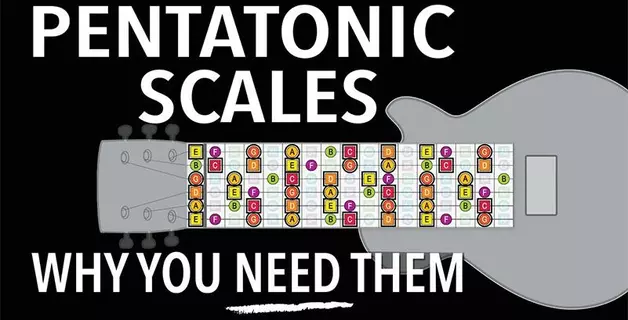
In various types of melodies, mode is used to regulate the so-called sound scales and steps. The main importance is given to the first step of the series, which is called the tonic. It is important for a musician to understand and sort out the minor and major modes, since they are the most common in the world. However, the matter is not limited to these two modes. Pentatonic, jazz improvisation, church and many other modes stand out. They are characteristic and inherent in certain cultural traditions, musical features of a particular region. They can be artificially created by composers for various purposes.
Harmony and texture
Playing several pitches together doesn’t automatically create a pleasing chord. Harmony — chord progressions and voice-leading — determines how consonant or expressive the music feels. For musicians, harmony is a major academic subject.
For listeners, harmony is simply how pleasant and coherent the music sounds. Texture refers to how musical lines, modes, pitches and chords are organized into a unified sound.
Registers and timbres
A register is a specific pitch range. For example, the piano contains three primary registers:
- low
- middle
- high
Low registers sound darker and heavier; they include bass instruments and bass vocals. Middle registers suit most voices and instruments. High registers are brighter and lighter. The piano’s wide register range is one reason it’s central to composition.
Rhythmic pattern and tempo
Rhythm is associated with musical tempo – that is, the speed of sound is the ratio of sequences of a certain duration. Music genres (and types) are largely associated with rhythm. The more rhythmic and higher they are, the greater the tendency to such genres as disco, house, techno. The most measured rhythms are found in waltzes. Strong accents are present in the marches. In both cases, the rhythm is clear and consistent. In jazz compositions, on the contrary, the rhythm is implicit and varied. There are fast, medium and moderate tempos.
Strokes
Strokes are variations in sound. These are the sound extraction options that are characteristic of musical instruments. The ways of performing notes cannot be counted. In a broad sense, everything that extracts sound and is subject to tonality (modes) can be folded into a melody. That is why there are so many musical instruments. According to the classification, strokes are divided into stringed plucked, stringed bowed, wind, piano. However, this general classification does not represent many instruments.
Dynamics
Dynamics in a melody indicates its strength and loudness of sound. You cannot do without it when you need to convey a certain image. Dynamics is not needed for lyrical moments. In the march, on the contrary, it gains the highest level of expressiveness.
Suggestions for writing melodies
A melody is a unique artistic creation — a sequence of pitches shaped by musical intuition.
After learning the main types of melodic motion, consider a few general suggestions:
- Keep learning and expanding your musical experience
- Continue writing and practicing consistently
- Don’t be afraid to experiment
- Consider the specifics of each genre; collaborate with musicians from different styles
- Don’t limit yourself to one musical element; contrasts can be powerful
- Create melodies that feel genuine
- Capture short sketches rather than waiting for large ideas
- Improvise — meaningful ideas often emerge spontaneously
- Blaming your instruments is pointless; what matters is how you use them