Music Theory Basics: Understanding Intervals, Scales, and Keys


Harmony is the art of combining musical notes in a way that sounds pleasing to the ear. To create harmonious melodies and chord progressions, you need to understand the fundamental building blocks: intervals, scales, and keys.
Whether you're just starting out in music production or looking to strengthen your theory knowledge, mastering these concepts will help you write better melodies, choose the right chords, and understand how songs are structured.
In this guide, we'll cover:
- Intervals – the distance between two notes
- Major and minor scales – the foundation of Western music
- Keys and tonality – how songs establish their harmonic center
- Modes – scale variations that create different moods
Understanding Intervals
An interval is the distance between two notes, measured in semitones (also called half steps). On a piano keyboard, one semitone is the distance from any key to the very next key, whether black or white.
Simple Intervals (Within One Octave)
Here are the basic intervals you'll encounter most often:
- Unison – 0 semitones (the same note)
- Perfect fourth – 5 semitones
- Perfect fifth – 7 semitones
- Octave – 12 semitones
Major and minor intervals:
- Minor second – 1 semitone
- Major second – 2 semitones
- Minor third – 3 semitones
- Major third – 4 semitones
- Minor sixth – 8 semitones
- Major sixth – 9 semitones
- Minor seventh – 10 semitones
- Major seventh – 11 semitones
Special intervals:
- Tritone (augmented fourth or diminished fifth) – 6 semitones
The tritone has a distinctively dissonant sound and was historically called "the devil's interval" in medieval music theory.
Compound Intervals (Larger Than One Octave)
When intervals span more than an octave, they're called compound intervals. These are simply the basic intervals plus one or more octaves:
- Minor ninth – 13 semitones (minor second + octave)
- Major ninth – 14 semitones (major second + octave)
- Minor tenth – 15 semitones (minor third + octave)
- Major tenth – 16 semitones (major third + octave)
- Perfect eleventh – 17 semitones (perfect fourth + octave)
- Perfect twelfth – 19 semitones (perfect fifth + octave)
And so on, up to two full octaves and beyond.
Why Intervals Matter for Producers
Learning intervals isn't just academic—it's incredibly practical for music production:
Play melodies by ear. Once you can recognize intervals, you can figure out any melody just by listening. Hear a jump in a vocal line? If you know it's a perfect fifth, you can recreate it instantly.
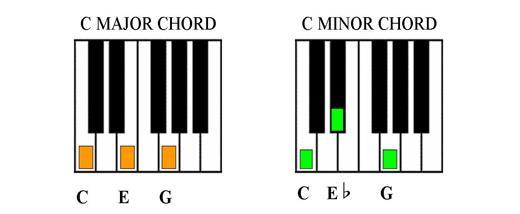
Understand chord construction. Every chord is built from specific intervals. A major chord is a root note, major third, and perfect fifth. A minor chord uses a minor third instead. Knowing this lets you build any chord in any key.
Communicate with other musicians. When you're collaborating, saying "move that note up a major third" is much clearer than "make it sound happier."
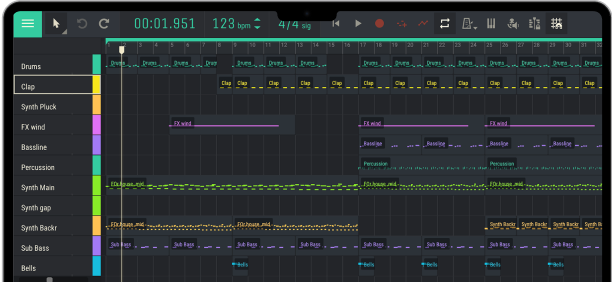
Want to start applying these concepts right away? Open Amped Studio in your browser and experiment with different intervals on the piano roll—no installation required.
Major and Minor Scales
A scale is a collection of notes organized within an octave, following a specific pattern of intervals. The two most important scales in Western music are major and minor.
The Major Scale
The major scale follows this pattern of whole steps (W = 2 semitones) and half steps (H = 1 semitone):
W - W - H - W - W - W - H
For example, the C major scale uses only white keys on a piano:
C - D - E - F - G - A - B - C
Major scales tend to sound bright, happy, or triumphant—though this isn't a strict rule. Mozart's "Piano Sonata No. 16 in C Major" has moments of tension and melancholy despite being in a major key.
The Minor Scale
The natural minor scale follows a different pattern:
W - H - W - W - H - W - W
For example, the A minor scale also uses only white keys:
A - B - C - D - E - F - G - A
Minor scales often sound darker, sadder, or more introspective—but again, context matters. The famous "Grasshopper Song" is in a minor key but sounds playful and upbeat.
Scale Degrees and Stability
Both major and minor scales have stable and unstable scale degrees:
Stable degrees (1, 3, 5) form the foundation of the key. These notes sound resolved and complete. They're also the notes that make up the tonic chord—the chord built on the first note of the scale.
Unstable degrees (2, 4, 6, 7) create tension and want to move toward stable notes. This push and pull between tension and resolution is what makes melodies interesting.
Think of it like building a wall: stable degrees are the bricks, unstable degrees are the mortar. You need both to create a solid musical structure.
What Is Tonality?
Tonality refers to the gravitational pull toward the tonic throughout a piece of music. It's the sense that one note (the tonic) is "home," and everything else moves toward or away from it.
The word comes from Latin "tonus," meaning sustained tension. Just like staying "on your toes" in everyday life, music maintains a kind of tension and energy throughout—always relating back to the tonic.
Harmonic tonality specifically refers to the system of major and minor keys that's dominated Western music for the past 400 years. This is the tonal system you hear in most pop, rock, jazz, and electronic music.
Modes: Beyond Major and Minor
While major and minor are the most common, there are other scale patterns called modes. These are variations of the major scale, each starting on a different scale degree.
- The Seven Diatonic Modes
- Ionian (same as major scale)
- Dorian (minor with a raised 6th)
- Phrygian (minor with a lowered 2nd)
- Lydian (major with a raised 4th)
- Mixolydian (major with a lowered 7th)
- Aeolian (same as natural minor scale)
- Locrian (diminished, rarely used)
Each mode has its own distinctive color and emotional quality. Dorian sounds jazzy and sophisticated. Phrygian has a Spanish or Middle Eastern flavor. Lydian sounds dreamy and ethereal.
Modern producers use modes to add variety and interest. For example, many house and techno tracks use Dorian mode to create a groove that's darker than major but not as melancholy as minor.
Scales vs. Modes: What's the Difference?
Here's a simple way to understand it:
A scale is any series of notes arranged in ascending or descending order. It could contain any number of notes (pentatonic scales have 5, chromatic scales have 12, etc.).
A mode is a specific type of scale built on the major scale pattern, where each mode starts on a different degree. Modes always contain 7 notes.
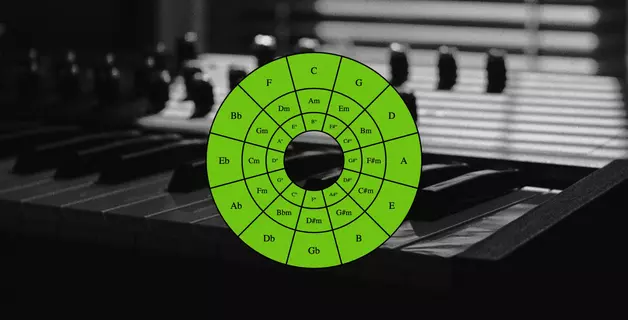
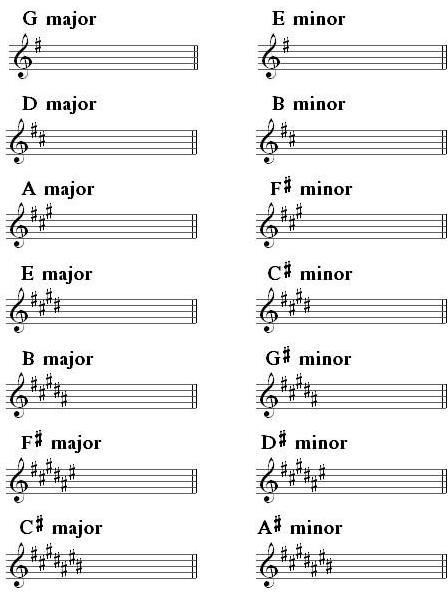
A key specifies which mode (usually major or minor) and which tonic note.
So when we say "C major scale," we're being specific: it's the major mode, starting on C, played from low C to high C.
Why Practice Scales?
If you're learning an instrument or working on your production skills, practicing scales has real benefits:
Build technique. Scales develop finger dexterity, speed, and accuracy. Most difficult passages in music are actually just scale fragments played fast.
Learn the keyboard layout. Very few songs stick to just the white keys (C major or A minor). Most use sharps and flats. Practicing scales in all 12 keys helps you navigate the entire keyboard confidently.
Improve your ear. When you play scales regularly, you internalize the sound of each interval and scale degree. This makes it easier to write melodies, transcribe music, and improvise.
Speed up learning. If you know your scales cold, you can learn new songs much faster because you'll recognize familiar patterns instead of figuring out each note individually.
Putting It All Together in Amped Studio
Understanding intervals, scales, and keys unlocks your creativity as a producer. Instead of randomly clicking notes in the piano roll, you can make intentional choices based on musical theory.
Try Amped Studio to apply these concepts immediately. It's a browser-based DAW that works on any device—no installation, no setup, just instant music making. Use the piano roll to experiment with different intervals, play scales in various keys, and hear how major and minor modes change the mood of your tracks.
The best part about learning theory? It never restricts your creativity. Instead, it gives you a deeper vocabulary to express your musical ideas with precision and confidence.
FAQ
An interval is the distance between two notes, measured in semitones. For example, a perfect fifth is 7 semitones, a major third is 4 semitones, and an octave is 12 semitones. Intervals are the building blocks of chords and melodies.
Major and minor scales use different patterns of whole steps and half steps. Major scales typically sound bright or happy, while minor scales tend to sound darker or more emotional. The main difference is that minor scales have a lowered third, sixth, and seventh degree compared to major.
A key specifies two things: the tonal center (which note is "home") and whether the piece uses a major or minor scale. For example, "A minor" means A is the tonic and the piece uses the minor scale pattern.
Scales develop your technical skills, improve your musical ear, and help you understand song structure. They're also the foundation for chord progressions, melodies, and improvisation. Learning scales makes everything else in music easier.
Modes are variations of the major scale, each starting on a different scale degree. While "scale" is a general term for any ordered series of notes, modes specifically refer to the seven diatonic patterns: Ionian, Dorian, Phrygian, Lydian, Mixolydian, Aeolian, and Locrian.
A perfect fifth contains 7 semitones. It's one of the most consonant and stable intervals in music, which is why it's used extensively in rock power chords and bass lines.
The tonic is the first and most important note of a scale or key. It's the "home base" that gives a piece of music its sense of stability and resolution. Everything in a tonal piece ultimately relates back to the tonic.