What is House Music? A Journey Through the Genre That Changed Dance Music Forever

House music is a genre of electronic dance music born in Chicago in the early 1980s, characterized by a repetitive four-on-the-floor beat, synthesized basslines, and tempos typically ranging from 120-130 BPM. Created by DJs mixing disco, soul, and electronic sounds using drum machines and samplers, house became the foundation for nearly every form of modern electronic dance music.
But ask any veteran of Chicago's Warehouse or New York's Paradise Garage, and they'll tell you something deeper: house is a feeling – a sentiment echoed in countless house anthems since the genre's birth. Born from Black and Latino LGBTQ+ communities, house music wasn't just a new sound. It was a refuge, a liberation, and a movement that would eventually circle the globe.
In this article, we'll explore:
- The origins of early house music in Chicago's underground clubs
- The key characteristics that define the house music genre
- Major subgenres from acid house to deep house to progressive house
- House music's evolution and lasting influence on electronic dance music
- How you can start making your own house tracks today
The Birth of House: Chicago's Underground Cauldron
The Warehouse & Frankie Knuckles
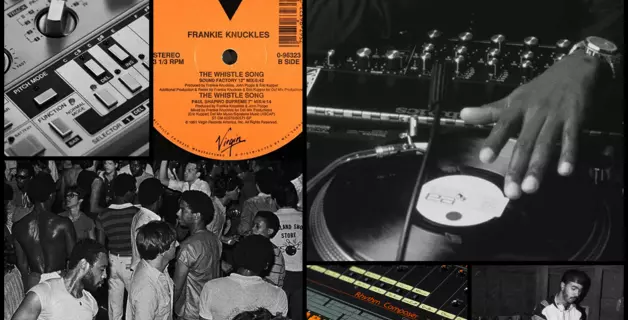
The term "house music" wasn't invented in a studio – it was born on the dancefloor of The Warehouse, a Chicago club where DJ Frankie Knuckles held residency from 1977 to 1982. When regulars would visit record shops asking for "that music Frankie plays at the Warehouse," clerks started tagging records as "house music." The name stuck.
Knuckles didn't play a single genre. His sets were a stylistic cauldron: extended disco edits, European Italo disco and synth-pop imports, and his own reel-to-reel tape loops. Using a Roland TR-808 drum machine, he'd layer new beats over Philly soul classics and forgotten disco gems, stretching breakdowns and building hypnotic grooves that kept dancers moving until dawn. House wasn't a break from disco – it was disco's underground evolution after the mainstream declared it dead following the infamous 1979 Comiskey Park "Disco Sucks" riot.
Ron Hardy & The Music Box
While Knuckles refined house's soulful side, Ron Hardy at The Music Box (a separate Chicago club) pushed the sound into stranger, grittier territory. Hardy's sets were raw and unhinged – faster tempos, pitch-shifted vocals, druggy tape loops, and darker tracks pulled from EBM (Electronic Body Music) and European industrial records besides the canonical disco and synth pop selection. If Knuckles was the architect, Hardy was the mad scientist. Both were essential to house music's DNA, representing two sides of the same revolutionary coin.
Early Chicago labels like Trax Records (founded 1984) and DJ International became the home for these new sounds, releasing tracks that would define the genre's first wave.
In 1986, Marshall Jefferson released what many consider the definitive house track: "Move Your Body" also known as "The House Music Anthem" that became an archetype of hands-in-the-air piano house.
Key Characteristics of House Music
What makes house music house? Several defining elements connect to establish the house music genre:
- Four-on-the-floor beat: The foundation of house is a steady kick drum on every beat – boom, boom, boom, boom. This relentless four-on-the-floor beat is what keeps dancers locked in.
- Tempo: Classic house typically sits between 120-130 BPM. That tempo sweet spot is fast enough to energize but slow enough to groove.
- Drum machines and rhythm: Early house music was built on Roland TR-808 and TR-909 drum machines, which gave the genre its distinctive snappy snares and deep kicks. Modern producers use everything from vintage hardware to software – explore online drum machines to understand how these rhythms are constructed. The sound matters more than the tool.
- Synthesized basslines: Deep basslines (often from synthesizers like the Roland TB-303 or Juno-106) are central to the tracks' structure, providing the low-end groove that makes house physical.
- Repetition and loops: House thrives on hypnotic repetition – short musical phrases often looped and layered, building tension and release over extended periods.
- Vocal samples: From soulful divas to spoken-word snippets, vocals in house often come chopped, looped, and treated as another instrument in the mix.
Subgenres of House Music
As house spread beyond Chicago, it evolved into countless variations, each with its own flavor and characteristics.
Acid House
In 1987, Phuture released "Acid Tracks," a hypnotic, squelching track built entirely around the Roland TB-303 bass synthesizer. The 303, originally designed to emulate a bass guitar, became the signature sound of acid house when producers discovered its ability to create warbling, psychedelic textures by tweaking its resonance and cutoff knobs.
Acid house became the sound of late-80s rave culture, particularly in the UK, where it fueled the Second Summer of Love in 1988-89. Adonis' 1986 track "No Way Back" is a stone-cold acid house classic – raw, stripped-down, and relentless.
Deep House: Chicago's Second Wave
By the early 1990s, Chicago's second wave of producers began refining house into something deeper and more introspective. Labels like Cajual Records, Relief Records, and Guidance Recordings became home to a more soulful, hypnotic sound.
Deep house strips away some of house's more aggressive elements in favor of warm basslines, jazzy chords, and understated grooves. It's music for 4 AM – contemplative, emotional, timeless.
Dajae's 1994 anthem "Brighter Days" perfectly captures deep house's spiritual, uplifting energy.
Kerri Chandler, a producer who emerged in the early 90s, became known for his deep, rolling grooves and meticulous production. His 2010 track "House Is House" is a deep reflection on the roots and future of the genre:
Soulful & Garage House
As house evolved in New York during the 1990s, this wave took on on a more gospel-influenced, soulful character. This style, often called garage house after the legendary Paradise Garage club, featured warm, organic productions with live instrumentation and powerhouse vocal performances.
Producers like Masters at Work (Louie Vega and Kenny "Dope" Gonzalez) became legends for this sound. Their 1997 track "To Be in Love" is a perfect example of soulful, uplifting garage house:
UK producer MK (Marc Kinchen) brought the garage house sound across the Atlantic with his distinctive production style. His 1995 remix of Alana's "Always" showcases garage house's signature warmth and groove:
House Music's Many Evolving Branches
As house spread globally through the 1990s and 2000s, it splintered into countless variations. Progressive house, pioneered by DJs like Sasha and John Digweed, stretched tracks into 8-10 minute journeys with long builds and euphoric breakdowns – perfect for late-night club marathons.
Tribal house emerged as a darker, more hypnotic offshoot, heavy on percussion and spiritual energy, popular in Ibiza's late-night marathon sets, while jackin' house stayed close to Chicago's acid roots, emphasizing the syncopated bouncy groove.
Funky house came to prominence in the 1990s, particularly through French producers like Daft Punk and Cassius, blending disco samples with heavy compression an creative use of filtering.
Tech house fused house's groove with techno's mechanical precision, while electro house brought harder synths to festival stages.
Needless to say, house came to be made all over the world and quite a few regional variations created their own distinct sound. Italo house from Italian producers like Don Carlos and Alex Neri among others brought a distinctly European melodic sensibility, while Detroit's Moodymann crafted quirky, soulful layered sampled grooves.
House vs. Techno, House vs. Trance: What's the Difference?
If you're new to electronic dance music, here's a quick guide to understanding how house differs from its sibling genres:
House vs. Techno: House and techno are sibling genres – both born in the Midwest around the same time (Chicago and Detroit, early 1980s), but with different philosophies. Techno is generally faster, more aggressive, and minimalistic – mechanical, futuristic, often without vocals. House is groovier, more soulful, and rooted in disco's warmth. Think of it this way: house makes you dance; techno makes you move.
House vs. Trance: Trance emerged in Europe and Goa (India) in the late 1980s-early 1990s, influenced by many european electronic genres rather than house music and taking them into new psychedelic directions. Where house is funky and syncopated, trance is arpeggiated, dense, and hypnotic – designed to induce a trance state (hence the name). Trance is what happens when Euro-disco discovers LSD and goes to space. House stays on the dancefloor.
House Music's Evolution and Legacy
By the late 1990s and 2000s, house had crossed over into the mainstream. Artists like Daft Punk, Swedish House Mafia, and David Guetta brought house-inspired sounds to festival stages and radio playlists worldwide – what many now broadly call EDM (electronic dance music). While purists debate the commercial shift, this era introduced millions to four-on-the-floor rhythms and proved house's adaptability.
The 2010s saw a resurgence of interest in house's classic sound. UK duo Disclosure brought garage-influenced house back to the charts with tracks like "When a Fire Starts to Burn" in 2013, introducing a new generation to the genre:
Meanwhile, labels like Defected Records, Nervous Records, and Strictly Rhythm are carrying the torch of the classic house sound into the 21st century, showcasing new output from scene veterans like Todd Terry and DJ Sneak alongside new producers.
House isn't just a genre – it's the genetic ancestor of nearly every form of electronic dance music that followed. Techno, hardcore, drum & bass, dubstep – all trace their lineage back to those Chicago basements in the early 1980s. What mainstream media now broadly labels "EDM" is, at its core, house music's global offspring.
From Roland TR-808s in Chicago basements to cloud-based production tools accessible from anywhere, the tools have evolved but the fundamental elements remain the same: a four-on-the-floor kick, a rolling bassline, and a groove that makes people move.
Creating Your Own House Music
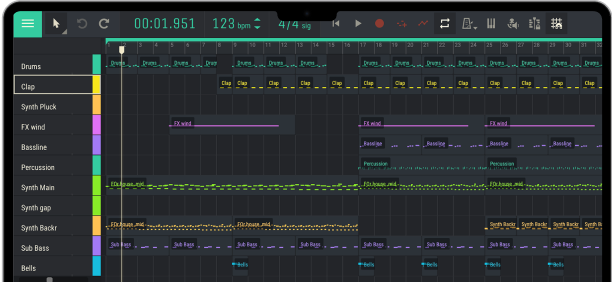
Whether you're inspired by classic Chicago deep house or modern festival sounds, the barrier to entry has never been lower. Our comprehensive guide on how to make house music walks you through building beats, basslines, and melodies using Amped Studio right in your browser – no downloads, no expensive hardware required.
From Chicago old school revival vibes to modern big room bangers, you can start producing immediately with cloud-based tools that put professional music production at your fingertips. Whether you're crafting acid squelches, deep basslines, or soulful vocal chops, Amped Studio gives you the freedom to explore house music's rich legacy and create your own contribution to the genre.

So What is House Music? Is There a Deeper Answer?
We've covered the history and the technical blueprint, but we may have just missed the soul of it. Is there anything else that can help you understand or even feel what house music is really about beyond just the beat?
DJ Sprinkles (Terre Thaemlitz), a producer, theorist, and house music historian who's spent decades documenting and defending the genre's queer, anti-commercial roots, offered this beautifully written reflection in the liner notes to the album Midtown 120 Blues:
Conclusion
House music is a genre born in Chicago's underground clubs in the early 1980s that became a universal language connecting dancers worldwide. From Frankie Knuckles at The Warehouse to Ron Hardy at the Music Box, from deep house to garage house, it has always been more than just a beat – it's a feeling, a liberation, and a movement.
Whether you're exploring acid house's psychedelic textures, deep house's introspective warmth, or progressive house's euphoric journeys, you're participating in a musical lineage that changed how the world dances. The four-on-the-floor pulse that started in Chicago basements now moves through clubs, ballrooms, and festival stages worldwide, bringing people together on the dancefloor.
FAQ
House music is an electronic dance music genre that originated in Chicago in the early 1980s, characterized by repetitive four-on-the-floor beats, synthesized basslines, and tempos around 120-130 BPM. It emerged from DJs like Frankie Knuckles and Ron Hardy mixing disco, soul, and electronic sounds in underground clubs.
While no single person "invented" house music, DJ Frankie Knuckles is widely considered the "Godfather of House" for his pioneering work at Chicago's Warehouse club. Ron Hardy, the Hot Mix 5 crew, and producers like Marshall Jefferson and Larry Heard were also instrumental in creating and defining the genre.
The core elements include a four-on-the-floor kick drum pattern, tempos between 120-130 BPM, synthesized basslines, repetitive loops and samples, drum machine rhythms (originally TR-808/909), and often soulful or chopped vocal samples.
While both genres emerged from similar roots, house typically features more soulful elements, vocal samples, and maintains a warmer, groovier feel. Techno tends to be more mechanical, minimalist, and futuristic in sound. House originated in Chicago, while techno developed simultaneously in Detroit.
Major subgenres include deep house (warm, introspective), acid house (TB-303 squelches), tech house (minimal, hypnotic), progressive house (long builds, euphoric), garage house (soulful, gospel-influenced vocals), funky house (disco-influenced), and tribal house (percussion-heavy).
The name comes from The Warehouse, the Chicago club where Frankie Knuckles was resident DJ. When people would ask record store clerks for "that music they play at the Warehouse," the term was shortened to "house music."