Modulation in Music — How Key Changes Make Songs Unforgettable

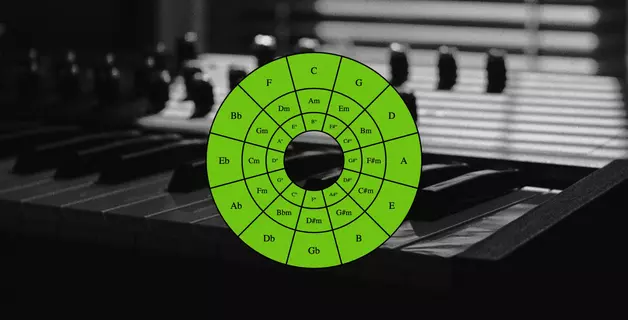
Modulation in music is the shift from one key to another within a song. It is one of the most powerful tools a songwriter or producer has — a single well-placed key change can turn a good chorus into an iconic one.
You have heard it dozens of times, even if you did not know the name. That sudden emotional lift before the final chorus of a pop ballad? That is modulation at work. It creates contrast, builds tension, and gives the listener a fresh burst of energy exactly when the song needs it most.
In this guide, we will cover:
What modulation actually means and how it differs from transposition
Four main types of modulation — with real examples of modulation in music you can hear right now
Practical tips on how to change key in a song without it sounding forced
How to transpose and shift keys in your own projects using browser-based production tools
What Is Modulation in Music?
So — what is modulation in music, exactly?
In the simplest terms, modulation means moving from one musical key to another during a song. If a chorus is in C major and then repeats a half step higher in D♭ major, the song has modulated. The tonal center — the "home note" that everything resolves to — changes.
This is not the same as transposition. Transposition means rewriting an entire song in a different key from start to finish — for example, moving everything down two semitones so a singer can hit the high notes more comfortably. Modulation happens within the song itself, usually at a specific structural moment like a bridge, pre-chorus, or final chorus.
To define modulation in music more precisely: it is the process by which the harmony leads the listener's ear from one tonal center to a new one, either gradually or abruptly. The key difference is that modulation is a journey — the listener feels the shift as it happens.
A clear sign of modulation: the same melody or chord progression repeats, but now everything sits higher or lower in pitch. The intervals between the notes are (generally) identical — the key itself has shifted. If the shift is brief and the music returns to the original key right away, it is probably just a borrowed chord or a passing accidental. If the new key sticks, that is modulation.
Modulation vs. Tonicization
These two terms sometimes get mixed up, but the difference matters. Tonicization is a brief, temporary nod toward a different key — usually lasting just one or two chords — before the music snaps back to the original tonal center. A classic example is a secondary dominant: playing a D7 chord in the key of C major briefly points toward G, but if the music immediately returns to C-centered harmony, no real modulation has taken place.
Modulation, by contrast, commits to the new key. The harmony cadences in the new tonal center, the melody uses notes from the new scale, and the listener's ear resets to accept a different "home." The longer the music stays in the new key, the stronger the modulation feels.
In practice, the line between the two can be blurry — especially in jazz and R&B, where harmonies often flirt with distant keys for just a few beats. But for the purposes of songwriting and pop production, the distinction is straightforward: if the key change sticks, it is modulation.
Why Key Changes Matter
Key changes serve several purposes in a song. The most obvious one is energy. Shifting the entire harmonic foundation upward — even by just a half step — gives the listener a physical sense of "lift." This is why so many pop and R&B songs save their biggest key change for the final chorus.
But energy is not the only reason. Modulation can also:
Create contrast between song sections (verse vs. chorus, verse vs. bridge)
Signal emotional shifts — moving from a major key to a minor key can darken the mood in a single beat
Prevent listener fatigue in longer compositions by refreshing the harmonic palette
Add sophistication to otherwise simple chord progressions
Modulation in pop music is often straightforward — a dramatic whole-step or half-step jump right before the final chorus. But in jazz, classical, and film scoring, modulations can be far more complex, passing through several keys within a few bars.
The best key changes in songs share one thing: they feel inevitable. Even when the shift surprises you, it makes emotional sense. That is the mark of a well-executed modulation.
4 Common Types of Modulation (with Pop Examples)
Not all key changes work the same way. Some are smooth and almost unnoticable; others are dramatic and impossible to miss. Below are four of the most common modulation types, each illustrated with well-known pop songs where the modulation point is extremely easy to hear.
The below examples of modulation in music were chosen because they happen at clear structural points (bridge → chorus, chorus → final chorus reprtition), they are unambiguous demonstrations of each technique, and they are recognizable to beginners and professionals alike.
1. Pivot-Chord Modulation
Pivot chord modulation is one of the smoothest ways to change keys. A pivot chord is a chord that exists in both the old key and the new key. Because the listener already "accepts" that chord, the key change feels natural and almost invisible.
How it works:
The song is in Key 1.
The progression hits a chord that belongs to both Key 1 and Key 2.
The next chord supports Key 2.
The music continues confidently in the new key.
This method is common in classical music, but it also appears in modern pop — sometimes in places you would not expect.
"Love On Top" — Beyoncé
Where the modulation happens: The song stays in C major for most of its runtime. Then, towards the middle of the song, the chorus repeats four times — and each time it steps up by a half step, moving through D♭ major, D major, E♭ major, and finally E major. The key changes are direct and abrupt, but the shared chord structure underneath keeps each one from sounding random.
What to listen for:
- The first key change at roughly 1:44 in the music video
- Four consecutive half-step jumps, each on a new chorus repeat
- How each modulation raises the vocal intensity along with the key
"Man in the Mirror" — Michael Jackson
Where the modulation happens: The song stays in G major through the first three choruses. At 2:52, on the line "make that… CHANGE," the key jumps up a half step to A♭ major — and the word "change" literally lands on the new key. From that point on, the gospel choir enters in full force and the song rides the new key to the end.
What to listen for:
- The word "change" landing on the new tonic at 2:52
- The gospel choir arriving with the new key
- The surge in energy that carries through the entire final section
2. Chromatic Modulation
Chromatic modulation uses notes or chords that do not belong to the original key to push the harmony into a new tonal center. Instead of a shared pivot chord, the shift happens through chromatic voice-leading — usually more dramatic and noticeable.
How it works:
One note moves up or down by a half step.
That chromatic movement changes the meaning of the next chord.
Suddenly the music makes sense in a new key.
This type of modulation often sounds bold or surprising.
"Livin' on a Prayer" — Bon Jovi
Where the modulation happens: Right before the very final chorus, the entire song jumps up a half step — from D minor to E♭ minor. There is no pivot chord or harmonic preparation. The band simply pushes everything up by a semitone, and the new key locks in immediately. It is one of the most recognizable chromatic modulations in rock music.
What to listen for:
- The buildup and brief pause just before 3:24
- The half-step jump into the final chorus
- The instant surge in energy — the song feels like it shifted into a higher gear
"Layla" (Unplugged) — Eric Clapton
Where the modulation happens: The intro riff and every chorus sit in D minor. Each time the verse begins — starting with "What'll you do when you get lonely" — the key drops a half step to C♯ minor. The C natural from D minor acts as a chromatic leading tone pulling into the new key. The shift happens in both directions throughout the song: down to C♯ minor for the verses, back up to D minor for the choruses.
What to listen for:
- The first key drop at around 0:31, when the verse replaces the intro riff
- The half-step descent from D minor to C♯ minor — subtle but unmistakable in the acoustic arrangement
- How the A major chord at the end of each verse pulls the song back up to D minor for the chorus
3. Chromatic Mediant Modulation
A chromatic mediant modulation moves between keys a third apart (major ↔ major or minor ↔ minor) that share one common pitch but do not belong to the same key family. The result is dramatic, cinematic, and very "big."
How it works:
Move from C major → A♭ major, or E minor → G minor, etc.
Only one note is shared between the keys
The change feels emotionally charged and colorful
This technique is especially common in film scores and 80s ballads.
"Kiss from a Rose" — Seal (Album Version)
Where the modulation happens:
This track is harmonically complex, constantly blurring the line between G Major and G Minor throughout the verses. However, the most distinct example of a chromatic mediant shift occurs at the transition from the second Chorus into the Vocal Interlude.
At 2:36, the chorus resolves firmly on G Major with the lyric "...on the grey." In the very next beat, the song drops a major third to E♭ Major (E♭maj7) for the famous "Ba-da-da" vocal harmony section. This move—from the tonic (G) directly to the flat submediant (E♭)—is a hallmark of chromatic mediant relationships, creating an instant feeling of expansiveness and cinematic drama.
What to listen for:
- 2:34: The second chorus peaks and resolves on the word "grey" (G Major).
- 2:40: The immediate drop in energy and color as the key shifts to E♭ Major for the vocal interlude.
- The "Fantasy" Sound: Notice how this specific chord change (moving a third away to a chord of the same quality) creates a "magical" or "otherworldly" atmosphere, distinct from standard pop progressions.
"My Heart Will Go On" — Céline Dion
Where the modulation happens: Leading into the final chorus, the harmony jumps by a major/minor third — a signature film-music modulation. The emotional lift is huge because chromatic mediants create brightness and contrast without feeling random.
What to listen for:
- 3:22: The distinct drum fill that signals the change is coming.
- 3:25: The modulation hits exactly on the word "You're" ("You're here, there's nothing I fear"). Notice how the ground shifts underneath the listener instantly—the unmistakable "movie-moment" harmonic jump
If you are working on your own tracks and want to experiment with dramatic shifts like these, recording your chord progressions first and then testing different key jumps is a great workflow. Our guide on recording a song covers how to set up a session and capture your ideas quickly.
4. Harmonic Modulation
Harmonic modulation is the most general type: the key changes through functional chord progressions, without chromatic tricks or mediant jumps. This is the familiar "key change before the last chorus" that shows up in countless pop songs.
How it works:
The harmony builds tension.
A dominant chord prepares the new key.
The next section begins firmly in the new key.
It is straightforward, clean, and emotionally effective.
"Love Story" — Taylor Swift
Where the modulation happens: Unlike a direct "jump" modulation, this track uses Functional Harmony to prepare the ear for the shift. The song is originally in D Major.
At the end of the final bridge, as the narrative peaks ("...he knelt to the ground and pulled out a ring"), the band hits a B7 chord. This chord does not belong in the key of D Major; it is the Dominant (V) of the new key, E Major. By inserting this specific "turnaround" chord, the harmony literally pulls the listener into the new key, making the arrival of the final chorus feel inevitable and satisfying rather than abrupt.
What to listen for:
- 3:16: The lyrics "pulled out a ring and said…" followed by a distinct B7 chord. This is the "Pivot" or "Functional" moment—it creates tension that demands to be resolved.
- 3:19: The release into E Major for the final chorus ("Marry me, Juliet..."). Note how the vocal melody shifts up a full step, matching the lifting energy of the story's resolution.
"I Want It That Way" — Backstreet Boys
Where the modulation happens: Unlike the abrupt "gear shift" found in many pop songs, this track uses a Pivot Chord to create a seamless harmonic transition. The song is originally in A Major.
As the Bridge builds tension ("I never want to hear you say..."), the music lands on a specific, powerful chord: F♯ Major. This chord does not belong to the original key of A Major; it is the Dominant (V) of the new upcoming key, B Major. By holding this chord, the songwriters create a "magnetic pull" that makes the ear expect the new key before it even arrives, making the modulation feel sophisticated and inevitable.
What to listen for:
- Around 2:24: the bridge resolves in a functional pivot. It creates suspense and clearly signals to the listener that the tonal center is moving.
- 2:33: The resolution into B Major for the final chorus. Notice how smooth the transition feels because the F♯ chord "walked" the listener to the front door of the new key.
How to Change Key in a Song: Practical Tips for Songwriters
Hearing modulation in other people's music is one thing. Using it in your own songs is another. Here are several practical modulation techniques you can try right now — no music theory degree required.
Start with a Common Chord
Look at the chords in your current key. Find one that also belongs to the key you want to move to. Land on that chord, let it breathe for a beat, and then continue in the new key. This is the pivot-chord approach, and it works in almost every genre.
Use the V (Fifth) Chord of the New Key
This is the fastest way to set up a key change. If you are in C major and want to move to D major, play an A major chord — which is the fifth scale degree (V) of D major — right before the new section. The A major chord creates tension that resolves naturally into D. This dominant-preparation trick is how most pop key changes work.
Try a Half-Step or Whole-Step Jump
The simplest and one of the most effective kinds of modulation. Just shift everything up by a semitone or whole tone at a structural break (before the last chorus, for example). No pivot chord needed. This direct modulation is sometimes called the "truck driver's gear change," and when used at the right moment, it still works every time.
Move Between Relative Major and Minor
How to modulate from a major key to a minor key in a song? The easiest path is through the use of relative minor. If your song is in C major, its relative minor is A minor — they share all the same notes. Shift your chord progression to emphasize A minor instead of C major, and you have a smooth, natural modulation that changes the mood without any dramatic harmonic leaps.
Experiment with Changing Key in a Song Gradually
Not every modulation has to be sudden. You can introduce accidentals (notes outside the current key) one at a time over several bars, gradually steering the harmony toward a new tonal center. This works especially well in verse-to-bridge transitions where you want the mood to evolve rather than snap.
Trust Your Ears
Music theory gives you the tools, but your ears make the final call. After placing a modulation, listen back to the transition several times. Does it feel like a natural continuation of the song, or does it stick out? If it feels forced, try a different pivot chord, or move the key change to a different structural point. Sometimes shifting the modulation just one bar earlier — or one bar later — is all it takes to make it click.
When Not to Modulate
One more thing worth mentioning: not every song needs a key change. Generally, electronic genres such as hip hop, techno, EDM prefer to stay in one key. Modulation works best when the song has room for emotional development, verses, choruses, a bridge. If your track is built around a single hypnotic loop, adding a key change might break the spell rather than enhance it.
How to Change the Key of a Song Online
Sometimes you do not need to rewrite the harmony — you just need to change the key of a song that already exists. Maybe a vocal track sits too high, or you want to match the key of a sample to your project's root note.
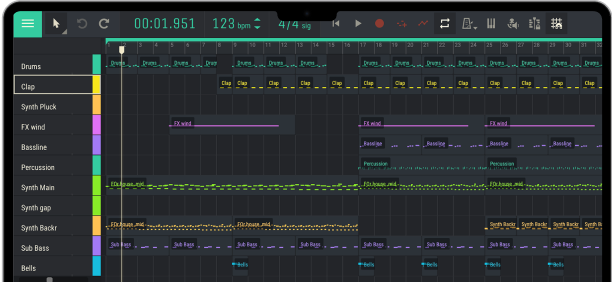
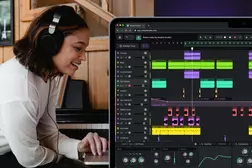
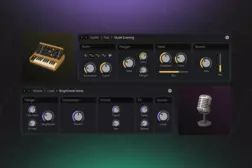
You can change the key of a song online directly in your browser using Amped Studio. Since it is a browser-based DAW, there is nothing to download or install — just open it and start working.
Here is what you can do:
Transpose MIDI regions — in a project select a MIDI clip and shift it up or down by any number of semitones. This is the cleanest way to change key for instrument parts, because MIDI transposition does not affect audio quality at all.
Pitch-shift audio — if you are working with recorded vocals or audio samples, you can use the pitch-shifting tools to move the audio up or down while keeping the tempo intact.
Final Thoughts
Modulation in music is not just a theory concept — it is a practical, emotional tool that songwriters have been using for decades to make songs more memorable. From Beyoncé stacking key change after key change or Celine Dion making a cinematic shift in “My Heart Will Go On” the principle is the same: a well-timed key change gives the listener something they did not expect but immediately feel.
The best way to learn modulation is to listen for it. Pick any of the eight songs in this guide, find the modulation point, and pay attention to what happens in the bars leading up to it. Once you can hear the setup, you will start noticing modulations everywhere.
Once you develop the ear for it, it's time to try it yourself. Open a project, lay down a chord progression, duplicate it and experiment with moving to a new key. Whether you use a pivot chord, a chromatic slide, or a simple half-step jump — the point is to provide an emotional shift and make the song take you on a journey.
Modulation FAQ
Modulation is the process of changing from one musical key to another within a song. Unlike transposition (which shifts the entire song to a new key), modulation happens at a specific point — like a bridge or final chorus — to create contrast, energy, or emotional impact.
Transposition is something you do to an entire song or piece of music — you change the key of that entire piece of music as a result of transposition. Modulation is a key change that happens during a song — the song is in one key before modulation and in a different key after it.
The four most common types are: pivot-chord modulation (using a shared chord), chromatic modulation (using half-step movement), chromatic mediant (jumping a third between keys), and dominant-prepared modulation (using functional harmony). Each produces a different emotional effect.
Some of the best key changes in songs include Beyoncé's "Love On Top" (multiple upward modulations), Bon Jovi's "Livin' on a Prayer" (half-step jump), and Céline Dion's "My Heart Will Go On" (cinematic chromatic mediant shift).
Use a pivot chord that belongs to both the old and new key, or prepare the new key with its dominant chord. Place the modulation at a natural structural break — between sections, after a drum fill, or at the start of a new phrase. Abrupt key changes work best when they coincide with a lyrical or rhythmic climax.
Yes. Browser-based DAWs like Amped Studio let you transpose MIDI and pitch-shift audio directly in your browser. You can adjust the key of any track without downloading any software — just sign up, log in, open the project and go.