How to Sample a Song: Sampling Techniques, Clearing, and Copyright
Sampling a song means taking a portion of an existing recording and using it as a building block in new music. A drum break, a vocal phrase, a melodic fragment, a texture: any recognizable piece of a recorded track can become the foundation of something new. To release sampled music commercially, you need to clear two separate copyrights: the master recording (the actual audio, usually owned by a label) and the composition (the melody and lyrics, usually owned by a publisher). Missing either one is copyright infringement, regardless of how short the sample is. The widespread belief that anything under a few seconds is automatically safe is a myth that has cost producers entire catalogs of royalties.
But understanding the legal framework is only half the picture. Sampling is also one of the most culturally significant creative practices in modern music. Entire genres were built on it. It rewards deep listening, musical curiosity, and knowledge of records and styles that no tutorial can teach.
This guide covers both dimensions of learning how to sample music: what sampling means as a creative practice, how music sampling copyright works, how the sampling process and clearance operate, and which sampling techniques will help you work with samples creatively in a DAW. Whether you are about to sample a song for the first time or looking to release sample-based tracks, this is the knowledge that protects your work and keeps doors open for you.
Key Takeaways
Every recorded song carries two separate copyrights (master recording + composition). Both need clearing to release sampled music commercially.
There is no legal minimum length for samples. Courts have ruled against samples as short as two seconds. The test is recognizability, not duration.
Platforms like Tracklib have transformed the clearing process, letting producers browse real songs and clear samples in minutes for a subscription fee.
Understanding the legal landscape early protects your creative work. The worst outcome is finishing your best track and discovering you cannot release it.
Sampling is a legitimate, culturally rich art form that has shaped modern music for over four decades.
What Is Sampling in Music?
So what is music sampling, exactly? It is the practice of taking a portion of an existing sound recording and incorporating it into a new composition. That portion can be a drum break, a bass line, a vocal phrase, a chord stab, an ambient texture, or a single hit lasting a fraction of a second. At its most basic, what is a sample? It is a piece of someone else's recording, lifted and placed into a new musical context.
Several related practices are often confused with sampling. A remix reworks an entire existing song, usually with access to individual stems, and is typically authorized by the original rights holders. A cover is a new performance of an existing composition: you play and sing the song yourself. An interpolation re-records a specific part of a song, such as a melody or a chord progression, using new instruments or voices rather than lifting the original audio.
Sampling is distinct because it uses the original recorded audio itself. Not a re-creation, but the actual sound. Musicologist Mark Katz calls this "performative quotation": capturing not just a melody or a rhythm, but the exact timbre, tone, and personality of a specific recorded moment. That is what makes sampling different from every prior form of musical borrowing, and it is also what makes it legally complex.
Why Sampling Matters: A Brief Cultural History
Sampling as a Modern Creative Language
In traditional composition, the fundamental unit of expression is a sequence of notes. Sample-based music operates on a fundamentally different logic. A two-bar phrase from a 1970s soul record carries not just pitch and rhythm, but room ambiance, tape saturation, the feel of a specific musician on a specific day.
The tension at the heart of sampling culture is this: copyright law was designed for a world of compositions and performances. Sampling treats all recorded sound as raw material for new creation. One of the key steps from a casual listener or music fan towards becoming a music maker is noticing sampling in your favorite tracks — a classic break in a new context, a vocal sample or a whole loop from an obscure old original.
The Machines That Changed Everything
The concept of reusing recorded sound as creative material has roots in mid-twentieth century experimental music, but remained a niche practice, until affordable digital samplers in the 1980s. New musical gear such as Akai S-series samplers, Akai MPC and E-mu SP-12 samplers gave bedroom producers and electronic musicians across the world the ability to build entire tracks from fragments of existing recordings. The workflow was physical and immediate: search through crates of vinyl, find a break or a phrase, load it into the sampler, chop it, rearrange it, sequence it into something that never existed before. This kind of focused searching through records, known in hip hop culture as "digging," became a creative discipline in its own right.

This was a revolution that generated entirely new genres. Hip hop sampling culture, from the golden age of De La Soul, Public Enemy, and DJ Premier, was built on this technology. So was the entire UK rave trajectory, from breakbeat hardcore through jungle and drum and bass, where producers sped up classic funk breaks from 100 BPM to 160 and beyond, creating rhythmic vocabularies that had never existed in any prior form of music.
Classic Breaks as Sonic Icons
Certain sampled drum breaks became foundational to entire musical movements. More than just drum patterns, they also function as cultural signifiers: timeless, instantly recognizable, carrying the weight of every track that has ever used them.
The Amen break, a seven-second drum solo from The Winstons' 1969 B-side "Amen, Brother," is arguably the most sampled recording in history. Sped up and chopped, it became the rhythmic engine of jungle and drum and bass. James Brown's "Funky Drummer" (1970) became one of hip hop's most fundamental building blocks. The Incredible Bongo Band's "Apache" (1973) soundtracked the birth of breakdancing. The single "Sing Sing" break by a 70s disco-funk outfit Gaz helped define the entire niche sub-genre called Jersey Club.
How to Sample Music in a DAW: Step by Step
Before getting into the cultural history and legal details, here is the practical core of the sampling process — the basic workflow for anyone learning how to sample a song in a DAW.
Find your source. Browse records, streaming platforms, or a pre-cleared catalog like Tracklib. Listen for phrases, breaks, or textures that spark an idea.
Import the audio. Load the file into your DAW. Lossless formats like WAV or AIFF preserve the most quality. Drag it on an audio track.
Isolate the section you want. Use your DAW's editing tools to trim the audio down to the specific fragment — a drum break, a vocal line, a chord stab.
Chop and rearrange. Slice the sample into smaller segments and reassemble them in a new sequence, at new timings, to create patterns the original never contained.
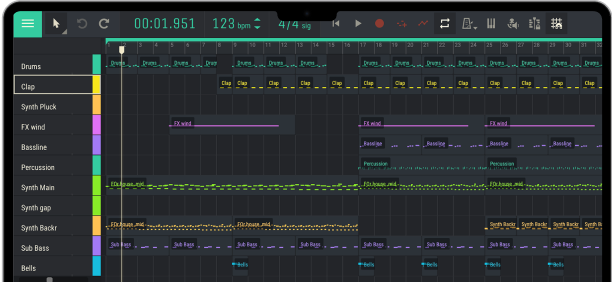
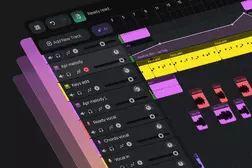
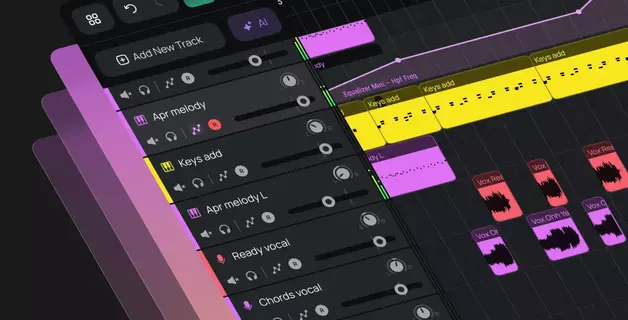
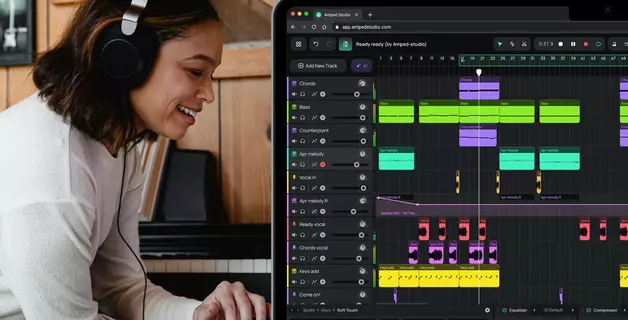
Process and transform. Apply pitch shifting, time stretching, filtering, or reversal to reshape the sample's character and make it fit your track. And don't foget processing with effects. Amped Studio, like any other DAW have plenty of them for you to experiment with.
Layer with your own elements. Add your own drums, bass, synths, or vocals around the sample. The sample becomes one texture in your composition, not the whole thing.
That covers the production side. But before you make anything you consider releasing, you need to know where your creative work stands legally. If you sourced your sample from Tracklib or a royalty-free sample pack, you are already covered. But if you sampled from a copyrighted recording read on to find out how copyright applies to samples, what clearing actually involves, what it costs, and how to make sure the track you just built can actually reach an audience.
Copyright Basics For Music Producers
Understanding how to legally sample a song starts here. This is the part most beginners skip, and it is the part that determines whether your best work can ever see the light of day.
The Two Types of Copyright
Every commercially released song carries two separate, independent copyrights.
The master recording is the actual audio: the specific performance captured and fixed as a recording. This is typically owned by the record label, or by the artist if they released independently. When you sample a song, you copy a portion of this recording directly.
The composition (also called the publishing) covers the underlying musical work: the melody, lyrics, chord progression, arrangement. This is typically owned by the songwriter, composer, or their publisher. Even if you re-record a melody note-for-note with your own instruments (interpolation), you still need permission from the composition rights holder, though you skip the master clearance since you created a new recording.
To release a track containing a sample, you need to clear both. These are almost always owned by different entities. Clearing one and missing the other is still infringement.
One popular sampling myth that needs correcting: there is no legal safe harbor based on sample length. The belief that "anything under five seconds is fair use" or "three seconds is fine" is completely false. Courts have ruled against samples as short as two seconds, and at least one major ruling held that any identifiable use of a sound recording requires clearance, regardless of length or how much it was altered.
How to Clear a Sample
The Traditional Path
The traditional sample clearance process — the standard answer to how to clear a sample through official channels — involves identifying the rights holders for both the master and the composition, contacting both parties, submitting a request, negotiating terms, and securing a written license agreement before release.
In practice, this process is slow (weeks to months), uncertain (many rights holders refuse outright), and expensive. This cost structure is what killed the golden age of sampling. In 1991, a court ruling against rapper Biz Markie for his uncleared use of Gilbert O'Sullivan's "Alone Again (Naturally)" changed the music industry overnight. Before that decision, labels released heavily sampled albums without systematic clearance. After it, every sample needed pre-clearing. Cult early 90s rap albums built from dozens of layered samples, like 3 Feet High and Rising or Paul's Boutique, became financially impossible under the new regime.
A Modern Solution
The traditional clearing process is built for labels with legal departments and established industry relationships. For independent producers, it is often prohibitively slow, expensive, and uncertain. This gap created demand for a different approach. Platforms like Tracklib now offer catalogs of real, originally released recordings — not sample packs, but actual songs — with sample clearance handled directly through the platform. You browse, download, sample, and clear the usage before release, all in one workflow.

Subscription plans start at approximately $15/month. Premium and Max tiers include unlimited sample clearance with no upfront licensing fees. The model is based on revenue sharing: you agree to share a percentage (2–20%, depending on how much of the original song you use) of your new track's earnings with the original rights holders. You can sample up to 60 seconds from any song, and stems are often available.
When You Still Need Traditional Clearance
Tracklib is a curated catalog, not a comprehensive music database. If the specific recording you want to sample is not in their collection, the traditional clearance route is still your path. Clearance services like DMG Clearances, Clearance 13, and Rightsify specialize in this. If you are working with a label, the label typically handles clearance as part of the release process.
One practical habit: keep detailed records of every sample you use while producing. Song title, artist, label, timestamp. This information is easy to track in real time and can become surprisingly hard to reconstruct months later when clearance becomes necessary.
Sampling Legally: Know the Rules Before You Sample
Many niche electronic music sub-genres and underground scenes have operated outside the formal clearing system for decades. Re-edits, bootleg remixes, unofficial reworks: all of these have been formative for numerous scenes from from disco to jungle. This is the cultural reality of an art form that develops and evolves before legal frameworks catch up to it.
The appeal of unrestricted sampling is real, especially for beginners. Sampling offers immediate access to sonic richness and familiarity: loading a classic break or a cool sampled loop, layering your own elements around it, processing and rearranging until it sits in a new context. This can produce results in an afternoon that feel genuinely layered — musically grounded, stylistically connected to decades of creative history.
The risk is that this gratification arrives before the legal understanding does. A producer builds tracks around uncleared samples, develops a distinctive sound — and then discovers they cannot distribute their work through major streaming platforms, pitch it for sync licensing, or sign it to a label. Learning how to sample a song legally from the start prevents this ceiling from ever forming.
Content ID (YouTube), audio fingerprinting (Spotify, Apple Music), and similar automated systems can identify samples even when they have been pitched, chopped, or layered. When a match is detected, the track may be taken down or its monetization redirected. Labels will not release music with uncleared samples. Distributors like DistroKid and TuneCore require a checkbox confirming the content does not infringe, but they do not verify the claim.
The point is not to avoid sampling. The point is to understand the landscape from the start and make creative decisions with full information.
Conclusion
How to sample a song is a question with two different types of answers: from the creative standpoint and from the legal one. On the creative side, sampling is one of the most powerful tools in modern music. It connects your work to decades of recorded history, rewards deep listening, and opens possibilities that exist nowhere else in production. On the legal side, what is creatively possible has always been far ahead of what is legally permitted.
Understanding how music sampling copyright works, knowing that every recording carries two independent copyrights, and choosing the right path — whether Tracklib, interpolation bordering on re-interpretation, or traditional sample clearance — is not a constraint on creativity. It is the knowledge that ensures the music you make can reach its audience.
The best time to learn how to sample music properly was before your first sample. The second-best time is now.
FAQ
Sampling in music is the practice of taking a portion of an existing recording — a drum break, a melody, a vocal, or a texture — and incorporating it into a new composition. The sampled audio is used directly, not re-performed. This distinguishes it from covers (new performances) and interpolations (re-recordings of existing musical ideas with new instruments).
Yes. Sampling a song legally requires obtaining clearance from both the master recording owner (usually the label) and the composition owner (usually the publisher). There is no minimum sample length that exempts you from this requirement. Platforms like Tracklib simplify the process to a subscription-based model with no upfront licensing fees.
Identify the rights holders for both the master recording and the composition, contact each party, submit a clearance request, negotiate terms, and secure a signed license agreement before release. Clearance services like DMG Clearances and Rightsify can handle this on your behalf. Alternatively, Tracklib lets you clear a sample directly through the platform in minutes.
On Tracklib, clearance is included in subscription plans starting at approximately $15/month, with a revenue share of 2–20% depending on sample length. Traditional clearance is significantly more expensive: publishers may charge around $1,500–$3,000 as a baseline fee plus a share of the new song's copyright, with the label charging additional fees for the master recording.
Yes. Royalty free samples from providers like Splice or Loopmasters, as well as Amped Studio's built-in sound library, are pre-cleared for commercial use. The license is included with purchase or subscription. For producers who want real recordings rather than pre-made packs, Tracklib offers a catalog of original music specifically designed for sampling with clearance built in.