What Is Drill Music? The Complete Guide to Drill Beats, Production & Culture
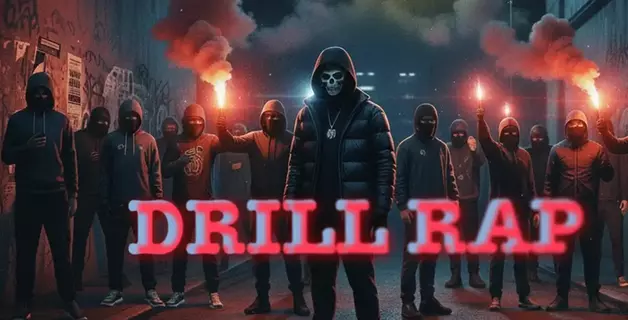
Drill music is a hard-hitting subgenre of hip-hop characterized by dark, minimalist beats, sliding 808 basslines, and raw lyrical content that reflects street realities. Born in early 2010s Chicago and later evolving through UK drill, Brooklyn drill, and other regional variations, drill has become one of the most influential sounds in modern rap production. Whether you're a listener trying to understand the genre or a producer learning how to make drill beats, this guide breaks down everything you need to know about drill music.
Drill Music Glossary: Key Terms
Before diving deeper, here are essential terms you'll encounter in drill music:
- Sliding 808s – Bass notes that glide smoothly between pitches, creating drill's signature haunting sound
- Opps – Opposition; rival gang members or enemies referenced in drill lyrics
- Skeng – British slang for weapon (common in UK drill)
- Drill flows – The monotone, emotionally detached vocal delivery style typical of Chicago drill
- Triplet hi-hats – Rapid three-note hi-hat patterns that define UK drill's energetic rhythm
- Gliding bass – Synonym for sliding 808s; the portamento effect on bass notes
- BPM doubling – Production technique where slower drill beats (60-70 BPM) are produced at double tempo (120-140 BPM)
The Origins and Evolution of Drill Music
Chicago Drill: Where It All Began
Drill music emerged from Chicago's South Side in the early 2010s, pioneered by artists like Chief Keef, Lil Durk, G Herbo, and Lil Reese. The genre gained mainstream attention in 2012 with Chief Keef's breakthrough track "I Don't Like," produced by Young Chop. This song—later remixed by Kanye West—brought drill's distinctive sound to a national audience and established the blueprint for drill rap production.
Chicago drill was defined by its slower tempo (60-70 BPM), dark synthesized melodies, heavy 808 bass, and emotionally detached vocal delivery. The production style drew from Southern trap music, particularly the work of Lex Luger, Shawty Redd, and Zaytoven, while incorporating elements of Chicago footwork. Producers like Young Chop became synonymous with the genre, crafting menacing beats featuring synthesized brass, bell melodies, prominent crash cymbals, and layered snare patterns.
Lyrically, Chicago drill artists delivered raw, unfiltered narratives about street life with minimal metaphorical language. The monotone delivery style—often enhanced with Auto-Tune—reflected the harsh realities of gang violence, poverty, and police pressure in Chicago neighborhoods. This direct approach contrasted sharply with the wealth-focused themes dominating mainstream hip-hop at the time.
UK Drill: A Global Evolution
By the mid-2010s, drill crossed the Atlantic and evolved into UK drill, particularly in South London areas like Brixton. British producers completely reimagined the sonic formula. UK drill increased the tempo to 130-150 BPM, introduced rapid triplet hi-hat patterns, and moved the snare slightly off-beat to create syncopated rhythms that gave the music an urgent, aggressive energy.
The UK drill vs Chicago drill debate centers on these production differences. While Chicago drill maintained traditional trap structures, UK drill incorporated influences from UK garage, grime, and bassline—British electronic music genres—resulting in "singing" basslines with more melodic movement. UK drill artists also abandoned the monotone delivery of Chicago drill, opting instead for aggressive, boastful vocal performances.
Artists like Digga D, Headie One, and 67 helped establish UK drill as a distinct subgenre with its own slang ("skeng" for weapon, "opps" for rivals) and cultural identity. The UK drill scene quickly influenced drill's evolution worldwide, spreading to Ireland, Australia, and across Europe.
Brooklyn Drill and Beyond
Brooklyn drill emerged in the late 2010s, blending Chicago's foundational sound with UK drill's energetic production style. The subgenre gained mainstream popularity through Pop Smoke, whose 2019 mixtape Meet the Woo introduced sliding 808s and UK-influenced rhythms to American audiences. Unlike Chicago's emotionally detached delivery, Brooklyn drill artists brought emotional inflection and dynamic flows to their performances.
Pop Smoke's tracks "Dior" and "Welcome to the Party" became defining examples of how to make drill beats with crossover appeal. Tragically, Pop Smoke was killed in 2020, but his posthumous album Shoot for the Stars, Aim for the Moon debuted at number one on Billboard, cementing Brooklyn drill's place in hip-hop history.
More recently, Bronx drill has introduced another variation, incorporating samples from popular older songs and increasing tempos to 160-180 BPM. Artists like Ice Spice have found viral success on TikTok with this style, making drill music more accessible to younger audiences while maintaining the genre's core identity.
Drill Music Production: The Technical Breakdown
Core Elements of Drill Beats
Understanding how to make drill beats requires recognizing the genre's signature production techniques:
808s and Bass: The most defining element is the sliding or gliding 808 bassline. Producers use pitch bends and portamento to create eerie, descending bass melodies that give drill its haunting quality. The 808 slides between notes rather than hitting them cleanly, producing that characteristic drill sound.
Tempo and Rhythm: Chicago drill typically operates at 60-70 BPM (or doubled to 120-140 BPM in production software). UK drill and Brooklyn drill push tempos higher, ranging from 130-150 BPM. The hi-hat patterns differ significantly—Chicago drill uses sparse, trap-influenced hi-hats, while UK drill employs rapid triplet patterns that create frenetic energy.
Melodic Elements: Dark, minimalist melodies dominate drill production. Synthesized brass sounds, bell tones, ominous piano chords, and sparse string arrangements create atmosphere without overwhelming the rhythm section. The melodies often feel deliberately cold and repetitive, reinforcing the genre's bleak aesthetic.
Drum Programming: Drill beats feature hard-hitting snares, prominent crash cymbals, and intricate percussion layering. UK drill producers often place snares slightly off the typical 2 and 4 beats, creating syncopation that drives the track forward with unpredictable energy.
Drill Music vs Trap: Understanding the Differences
Many producers confuse drill music production with trap production, but key differences separate these subgenres:
- Tempo: Trap typically runs 140-160 BPM, while Chicago drill sits at 60-70 BPM (or 120-140 when doubled)
- 808 patterns: Trap uses punchy, staccato 808s; drill employs sliding, melodic 808 basslines
- Hi-hats: Trap features rapid, rolling hi-hat patterns; drill varies from sparse (Chicago) to triplet-heavy (UK)
- Melody: Trap often includes lush, layered melodies; drill keeps melodies minimal and dark
- Vocal delivery: Trap allows diverse vocal styles; drill traditionally favors monotone or aggressive delivery
While drill shares trap's Southern hip-hop DNA, it has evolved into a distinct production style with regional variations that continue to influence modern hip-hop.
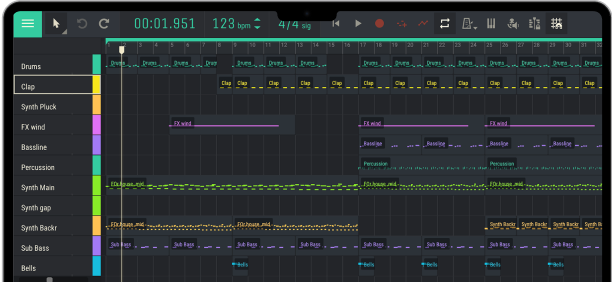
How to Make Drill Beats in Amped Studio
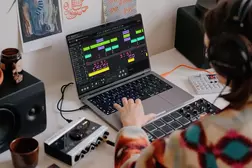
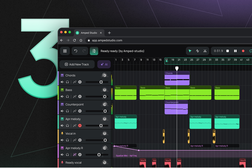
Amped Studio provides everything you need for drill music production, whether you're creating Chicago-style beats or experimenting with UK drill's faster rhythms. Here's how to get started:
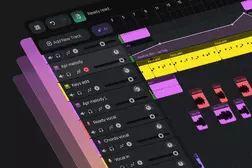
Using Amped Studio's AI Assistant for Drill Production
The AI Assistant can help you quickly generate drill-style patterns and suggest appropriate sound selections. When working on drill rap production:
- Set your tempo: Start at 140 BPM for a doubled Chicago drill feel, or 145 BPM for UK drill
- Load drill-appropriate sounds: Use Amped Studio's synthesizers to create dark, menacing melodies with saw waves, square waves, or brass presets
- Program sliding 808s: Use pitch bend automation to create those signature gliding basslines—the AI Assistant can suggest effective pitch patterns
- Layer percussion: Combine hard snares, prominent crashes, and either sparse or triplet hi-hats depending on your chosen drill style
Go ahead and login to Amped Studio and try out either of these three methods to make your own drill beat: layer instrument parts you make yourself, drag some loops from drill sample packs (more on than later), or check out what Amped Studio's AI assistant can do for you with its "Drill" genre preset.
Working with Drill Sample Packs
Most drill producers supplement their workflow with dedicated sample packs rather than building every sound from scratch. Here's what to prioritize:
- 808 samples and bass: Get packs with multiple 808 variations—clean, distorted, and layered. The samples should maintain punch when you apply pitch automation for slides. Test before buying: if the 808 loses clarity when pitched down, skip it.
- Drum one-shots: Look for snares with natural reverb tails and hi-hats that cut through dense mixes. UK drill needs especially crisp hi-hats for rapid triplet patterns. Avoid overly processed samples—you want room to add your own effects.
- Melodic elements: Dark piano loops, strings, and vocal chops in minor keys (A minor, D minor, G minor). Check that loops are properly timed and have clean start/end points for seamless looping.
- Atmospheric layers: Vinyl crackle, reversed sounds, and ambient noise. Use sparingly—these add texture but shouldn't dominate your mix.
- Finding sample packs: Splice, Cymatics, and producer-specific packs (CashMoneyAP, Ghosty) offer both free and paid options. Free packs work for learning; invest in paid packs once you know what you need.
In Amped Studio, import your sample pack files directly into the browser-based editor and organize them by type (drums, bass, melody, FX) for faster workflow. The platform handles common formats without additional plugins.
Tips for Authentic Drill Sound
- Keep melodies minimal—drill isn't about complex chord progressions
- Make the 808 bass the melodic centerpiece with prominent sliding patterns
- Use hard-hitting drums with crisp snares and impactful kicks
- Apply subtle distortion or saturation to give elements that gritty drill character
- Don't overload the arrangement—space and minimalism define drill's aesthetic
The Cultural Impact and Controversy
Drill music has faced criticism for its association with gang violence, particularly in Chicago and New York. In 2022, New York Mayor Eric Adams and others linked drill lyrics to real-world gun violence, leading some radio DJs to stop playing drill tracks with violent content. The NYPD even removed drill artists from the Rolling Loud festival lineup citing safety concerns.
Critics argue this response echoes the controversies surrounding gangsta rap in the 1990s and unfairly targets artistic expression. Drill artists and advocates maintain that the music reflects existing realities rather than creating them, and that censoring drill addresses symptoms rather than root causes of violence.
Despite these challenges, drill continues evolving as a legitimate artistic movement. Modern drill artists are expanding the genre's boundaries, incorporating melodic elements, diverse production techniques, and broader lyrical themes while maintaining drill's core identity.
Start Making Drill Music Today
Whether you're drawn to Chicago drill's dark minimalism, UK drill's aggressive energy, or Brooklyn drill's melodic bounce, Amped Studio gives you the tools to create professional drill beats online. The platform's AI-powered features, comprehensive sample library, and intuitive interface make drill music production accessible to producers at any skill level.
FAQ
Yes. Drill music production is fully achievable with browser-based DAWs like Amped Studio. You need basic synthesis capabilities for creating dark melodies, good 808 samples or synthesizers for bass, and the ability to program drums and automate pitch for those signature sliding basslines. Many successful drill producers started with minimal equipment, focusing on understanding the genre's production techniques rather than expensive gear.
Chicago drill's foundational artists include Chief Keef, Lil Durk, G Herbo, King Von, and producer Young Chop. UK drill's key figures include Headie One, Digga D, and 67. Brooklyn drill was pioneered by Pop Smoke and Fivio Foreign, while Bronx drill features artists like Ice Spice. Each artist represents different regional interpretations of how to make drill beats and perform drill rap.
While drill originated as raw documentation of street life and many tracks address violence, the genre has expanded thematically. Modern drill artists incorporate personal struggles, aspirations, melodic elements, and broader social commentary. The perception of drill as exclusively violent oversimplifies a complex genre that serves as authentic expression for artists documenting their realities—though it's true that drill's unflinching approach to difficult subject matter remains part of its identity.