What Is Lo-Fi Music? A Guide to Lo-fi Hip-Hop, Sound, and DIY Production


If you've ever searched YouTube for "study beats" or "chill music to relax to," you've almost certainly encountered lo-fi music. This nostalgic, deliberately imperfect genre has become the soundtrack to millions of people's work sessions, late-night study marathons, and lazy Sunday afternoons. But what exactly is lo-fi music, and why has it captured such a devoted following?
Mini Glossary: Key Lo-Fi Terms
Before diving in, let's clarify some essential terms you'll encounter in the lo-fi music world:
- Lo-Fi (Low Fidelity) – Music intentionally recorded or produced with technical imperfections like tape hiss, vinyl crackle, or reduced audio quality, creating a warm, nostalgic sound.
- Lo-Fi Hip-Hop – A specific subgenre combining downtempo hip-hop beats with jazz samples, ambient textures, and lo-fi production aesthetics. Often used as background music for studying or relaxing.
- Chillhop – A blend of chill-out music and hip-hop, closely related to lo-fi hip-hop, characterized by mellow beats and jazzy instrumentation.
- Downtempo – Electronic music with slower tempos (typically 60-90 BPM), emphasizing atmosphere and mood over danceability.
- Bedroom Pop – DIY music recorded in home settings with minimal equipment, often featuring lo-fi production values.
- Sample – A portion of existing music (often jazz, soul, or funk) reused in a new composition, common in lo-fi hip-hop production.
What Is Lo-Fi Music?
Lo-fi music—short for "low fidelity"—refers to music that embraces technical imperfections rather than hiding them. While traditional music production aims for crystal-clear, pristine sound quality (known as "hi-fi" or high fidelity), lo-fi music deliberately incorporates elements like background noise, distortion, tape hiss, vinyl crackle, and other "flaws" that give recordings a warm, nostalgic character.
The term "lo-fi" doesn't describe a single genre but rather a production aesthetic that can be applied to many musical styles. You might encounter lo-fi indie rock, lo-fi folk, lo-fi electronic music, and most prominently today, lo-fi hip-hop. Each carries the same core philosophy: authenticity and mood matter more than technical perfection.
What makes lo-fi music special is its emotional resonance. The imperfections create a sense of intimacy and nostalgia, as if you're listening to music on your parents' old cassette player or discovering a forgotten vinyl record in a dusty attic. This deliberately "unpolished" quality gives lo-fi its characteristic warmth and human touch.
The Many Faces of Lo-Fi: More Than Just One Sound
Here's where things get interesting—and potentially confusing. "Lo-fi music" means different things depending on who's talking:
- Lo-Fi Hip-Hop & Chillhop – This is what most people think of today when they hear "lo-fi music." Characterized by downtempo hip-hop beats, jazz piano samples, ambient textures, and that signature tape-warped sound, lo-fi hip-hop has become synonymous with YouTube study streams and chill playlists. Artists like Nujabes, J Dilla, and contemporary producers like Joji have shaped this subgenre.
- Lo-Fi Indie & Bedroom Pop – Before the YouTube era, "lo-fi" often referred to indie rock, alternative, and bedroom pop recorded on cheap equipment in home studios. Artists from the 1980s and 1990s embraced lo-fi production as an artistic choice and economic necessity, creating intimate, raw recordings on four-track cassette recorders.
- Lo-Fi Electronic & Ambient – Electronic producers also use lo-fi techniques, adding vintage synthesizer imperfections, tape saturation, and degraded samples to create nostalgic, dreamlike soundscapes.
- Noise Rock & Cassette Culture – In underground music scenes, lo-fi describes deliberately rough, unpolished recordings that reject mainstream production standards entirely.
This ambiguity is part of lo-fi's charm. The term has evolved from describing a recording quality to representing entire musical movements and aesthetics.
Lo-Fi Hip-Hop: The Soundtrack of the Internet Age
Let's focus on lo-fi hip-hop, the genre that's become a global phenomenon and the style most people envision when they think of lo-fi music today.
Origins: Nujabes, J Dilla, and the Foundations
Lo-fi hip-hop's roots trace back to the early 2000s with pioneering producers like Nujabes (Jun Seba), a Japanese producer who blended jazz samples with hip-hop beats to create atmospheric, introspective instrumentals. His work on the anime series Samurai Champloo introduced his sound to a wider audience and established many of the genre's core elements.
American producer J Dilla also profoundly influenced lo-fi hip-hop with his innovative sampling techniques and "off-kilter" drum programming that gave beats a human, imperfect feel. Other artists like MF DOOM and Madlib contributed to the aesthetic, creating a foundation for what would eventually explode into a worldwide subculture.
The YouTube Revolution and Lofi Girl
Lo-fi hip-hop truly entered mainstream consciousness through YouTube in the 2010s. Channels began streaming 24/7 lo-fi hip-hop playlists, providing endless background music for studying, working, or relaxing. The most iconic of these is Lofi Girl (formerly ChilledCow), whose livestream "lofi hip hop radio 📚 - beats to relax/study to" has become a cultural phenomenon.
The stream features a loop animation of an anime-style girl (named Jade) studying at her desk with her cat, accompanied by an endless rotation of chill lo-fi beats. Since launching in 2017, the channel has amassed over 15 million subscribers and become the face of lo-fi hip-hop culture. The stream has run for thousands of hours, briefly interrupted only by false copyright claims that sparked massive online backlash.
Other channels like College Music, Chillhop Music, and countless bedroom producers followed, creating a vast ecosystem of lo-fi content. The genre's growth on Spotify and Apple Music further cemented its place in mainstream music consumption.
What Makes Lo-Fi Hip-Hop Sound Like Lo-Fi Hip-Hop?
Lo-fi hip-hop has distinct sonic characteristics that make it instantly recognizable:
- Downtempo Beats – Typically between 70-90 BPM, slower than conventional hip-hop, creating a relaxed, unhurried feel perfect for concentration.
- Jazz & Soul Samples – Chopped and looped samples from jazz piano, saxophone, and vintage soul records provide melodic content and nostalgic warmth.
- Vinyl Crackle & Tape Hiss – Deliberately added background noise simulates the sound of old records and cassettes, enhancing the nostalgic atmosphere.
- Simple Drum Patterns – Understated, repetitive drum loops with laid-back snares and subtle hi-hats keep the rhythm unobtrusive.
- Ambient Textures – Rain sounds, café ambiance, vinyl static, and other environmental noises create immersive soundscapes.
- Imperfect Timing – Slightly off-beat drums and quantization give tracks a human, organic feel rather than rigid, computerized precision.
- Warm, Mellow Tones – Low-pass filters, tape saturation, and analog-style processing create a warm, soft sound that's easy on the ears during long listening sessions.
These elements combine to create music that's engaging enough to maintain focus but unobtrusive enough not to distract—the perfect balance for productivity.
Why Lo-Fi Music Matters: Cultural Significance
Lo-fi hip-hop has transcended its musical boundaries to become a cultural movement and coping mechanism for the digital age.
- The Study Music Phenomenon – Lo-fi hip-hop's association with studying and productivity has made it the unofficial soundtrack of students worldwide. The consistent, non-distracting nature of the beats helps listeners enter flow states and maintain concentration during long work sessions.
- Community & Connection – The live chat sections of lo-fi streams have become unexpected social spaces where strangers offer encouragement, share struggles, and create a sense of community. These digital spaces provide comfort and companionship without the pressure of direct interaction.
- Stress Relief & Mental Health – In an increasingly anxious world, lo-fi music offers a sonic refuge. Its calming properties make it popular for meditation, anxiety relief, and sleep.
- Democratized Music Creation – Lo-fi's DIY ethos and acceptance of imperfection have lowered the barriers to music production. You don't need expensive equipment or professional studios to create authentic lo-fi music—just creativity and a computer.
How to Make Lo-Fi Hip-Hop Music with Amped Studio
Ready to create your own lo-fi beats? Amped Studio, a browser-based digital audio workstation, makes lo-fi hip-hop production accessible to everyone—from complete beginners to experienced producers.
Using Amped Studio's AI Assistant for Lo-Fi Hip-Hop
One of the fastest ways to start making lo-fi music is with Amped Studio's AI Assistant, which includes a Lo-Fi Hip-Hop preset. Here's how to use it:
- Open Amped Studio in your browser (no installation required)
- Create a new project and select the AI Assistant option
- Choose "Lo-Fi Hip-Hop" from the genre menu
- Set your desired track length (starting from 30 seconds)
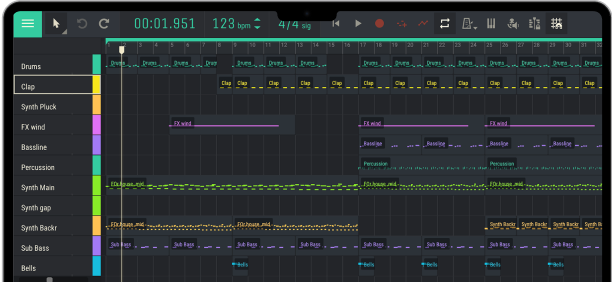
- Click "Generate" and watch as the AI creates a complete lo-fi hip-hop project with drums, bass, chords, and melodies on separate tracks
The AI Assistant gives you a multi-track starting point with chill beats, mellow loops, and vintage textures characteristic of lo-fi hip-hop. From there, you can customize every element, swap out instruments, add your own samples, or record vocals directly in your browser.
Manual Lo-Fi Beat Creation
If you want to build lo-fi beats from scratch, Amped Studio provides all the tools you need:
- Drums – Use the built-in drum machines or browse the Sound Library filtered by "Lo-Fi Hip Hop" to find pre-made loops with that characteristic laid-back groove.
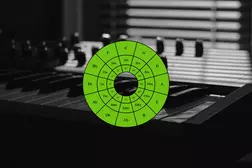
- Bass & Chords – Amped Studio's synthesizers like Volt Mini are perfect for creating warm, mellow bass lines and chord progressions. Use the Chord Creator tool if you're not familiar with music theory.
- Samples – Import your own jazz samples or use Amped Studio's extensive sample library to add melodic elements and texture.
- Effects – Apply effects like reverb, delay, and bitcrusher to add character and vintage warmth to your sounds. Use the compressor to glue your mix together.
- Finishing Touches – Add vinyl crackle, tape hiss, or ambient textures from the sound library to complete your lo-fi aesthetic.
Because Amped Studio runs entirely in your browser, you can work on your lo-fi tracks from anywhere — your laptop at a café, a library computer, or even a tablet. Your projects save to the cloud, so you can pick up exactly where you left off.
The Future of Lo-Fi Music
Lo-fi music shows no signs of slowing down. As the demand for calming, focus-oriented content continues to grow, lo-fi hip-hop has expanded into related subgenres like chillwave, vaporwave, and jazzhop. Artists continue to experiment with the format, blending lo-fi aesthetics with other genres like indie pop, R&B, and electronic music.
The DIY nature of lo-fi production means new artists emerge constantly, keeping the genre fresh and evolving. With accessible tools like Amped Studio's AI Assistant, anyone can join the lo-fi music community and contribute their own chill beats to the ever-growing catalog.
Whether you're a listener seeking the perfect study soundtrack or an aspiring producer ready to create your own nostalgic beats, lo-fi music offers something special: a warm, imperfect, deeply human connection in an increasingly digital world.
FAQ