How Do Speakers Work: Your Guide to Speaker Technology

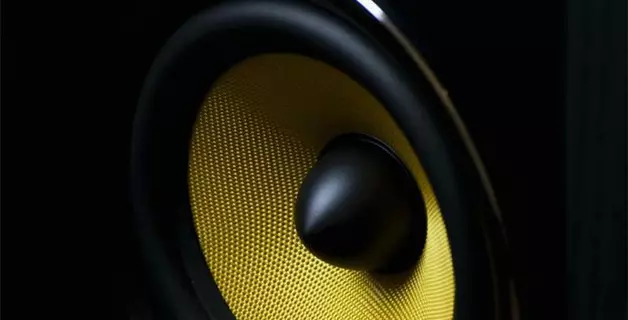
Speakers convert electrical audio signals into sound waves through electromagnetic principles. An electrical current flows through a voice coil positioned in a magnetic field, causing a diaphragm to vibrate and move air, creating the sounds we hear.
Understanding speaker technology helps you make informed decisions when selecting audio equipment for music production or listening. Despite technological advances in materials and manufacturing since the 1920s, the fundamental operating principle remains unchanged across all speaker types—from smartphone speakers to professional studio monitors.
In this guide, you will learn:
- The electromagnetic principles behind speaker operation
- Internal components and their specific functions
- How speakers reproduce different frequency ranges
- Technical specifications: impedance, sensitivity, frequency response
- The history and future of speaker technology
The Basic Principle of Speaker Operation
The speaker driver (also called a transducer) performs one essential function: converting electrical energy into mechanical movement that creates sound waves.
When an audio signal from an amplifier reaches the speaker terminals, it travels through a voice coil—a wire wound around a cylindrical former. This coil sits in the gap between poles of a permanent magnet. As alternating current passes through the coil, electromagnetic forces cause it to move back and forth.
The voice coil attaches to a diaphragm. When the coil moves, the diaphragm moves with it, pushing and pulling air to create pressure waves. These pressure waves are sound. The amplitude of diaphragm movement determines volume; the frequency of movement determines pitch.
A flexible surround allows the diaphragm to move freely while maintaining its position. Larger diaphragm movement produces higher volume levels.
Internal Components of a Speaker
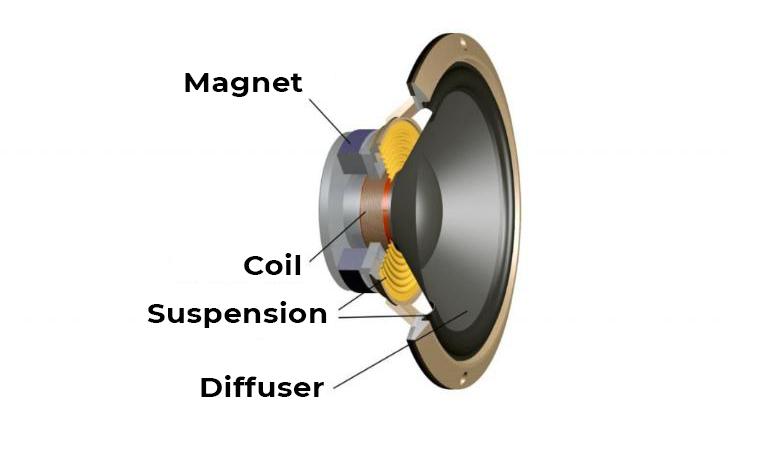
Each component inside a speaker performs a specific function in the sound production process.
Magnetic System Components
Pole, Backplate, and Top Plate
The pole sits at the center and directs the magnetic field. The backplate is located behind the pole, while the top plate is positioned above it. These three components focus the magnetic field into the gap where the voice coil operates.
Permanent Magnet
The permanent magnet provides constant magnetic energy. It retains its magnetic properties without external power. The voice coil only becomes magnetic when electrical current passes through it.
Voice Coil
The voice coil is wire wound around a cylindrical former (also called a bobbin). When electrical signal passes through the coil, it becomes an electromagnet. Magnetic forces between the voice coil and permanent magnet cause the coil to move. Like magnetic poles repel; opposite poles attract. This interaction creates the back-and-forth motion that produces sound.
Structural Components
Spider
The spider is a corrugated material that supports the voice coil while allowing vertical movement. It prevents lateral movement, maintaining stable motion along one axis only.
Surround
The surround holds the diaphragm at the top of the speaker basket, allowing smooth movement while producing sound.
Diaphragm
The diaphragm (also called a cone in some designs) is the visible moving surface of the speaker. It moves in response to voice coil movement, creating pressure waves in the air. These pressure waves produce the sounds we hear.
Dust Cap
The dust cap protects internal components from dust and debris, preventing damage.
Basket
The basket is the frame that holds all speaker components in their correct positions.
Electrical Components
Speaker terminals are the metal connection points where audio cables connect to the speaker. These terminals link to wire that connects to the voice coil, providing the electrical signal needed for operation.
Speaker Enclosure
The enclosure (also called a cabinet) serves three important functions:
First, it protects internal components from dust, dirt, and external elements.
Second, it reduces phase cancellation. When the diaphragm moves, it produces sound waves in both directions. Without an enclosure, these waves can cancel each other, resulting in reduced sound quality, particularly at low frequencies.
Third, the enclosure affects sound direction and bass response. Cabinet design influences how listeners perceive low frequencies.
Enclosures are made from dense, rigid materials to prevent unwanted resonance and vibration. Common materials include wood, MDF (medium-density fiberboard), and plastic.
How Speakers Reproduce Different Frequencies
A single driver cannot efficiently reproduce all audio frequencies. Physical limitations prevent optimal performance across the full frequency range.
At concerts, you will see separate speaker systems for different frequency ranges: subwoofers and woofers for low frequencies, midrange drivers for middle frequencies, and tweeters for high frequencies. Each driver type is designed specifically for its frequency range.
For home and studio use, multi-driver speakers solve this problem in a compact form.
Multi-Driver Speaker Systems
Multi-driver speakers use two, three, or four different-sized drivers to handle different frequencies. The most common configuration is the two-way system, which uses two drivers.
A crossover component splits the audio signal into different frequency ranges. High frequencies are sent to the tweeter, while low and middle frequencies are directed to the larger driver. The crossover uses filters to divide frequencies correctly.
This configuration allows the speaker to reproduce the full frequency range with higher quality than a single driver could achieve.
Why Different Driver Sizes Are Necessary
Most speakers have multiple drivers of different sizes on the front panel. This design addresses specific physical limitations.
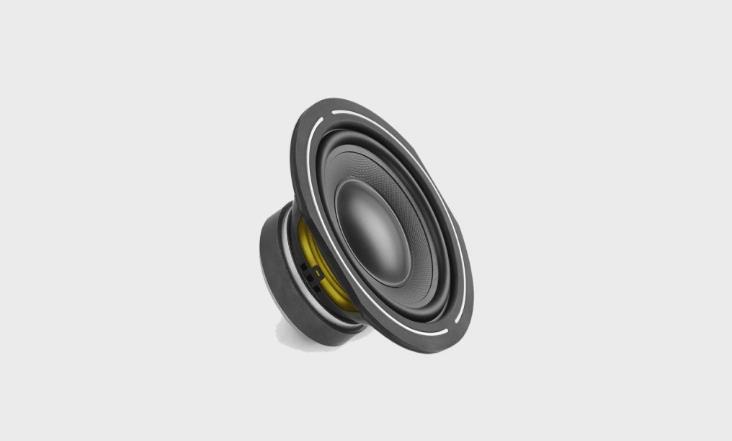
Small drivers cannot move enough air to produce low frequencies at sufficient volume levels. Large drivers handle bass well but have mechanical limitations that prevent efficient high-frequency reproduction.
Driver directivity also depends on size. Directivity refers to the angle within which sound is properly balanced. Large drivers have narrow directivity at high frequencies, while small drivers have limited directivity at low frequencies.
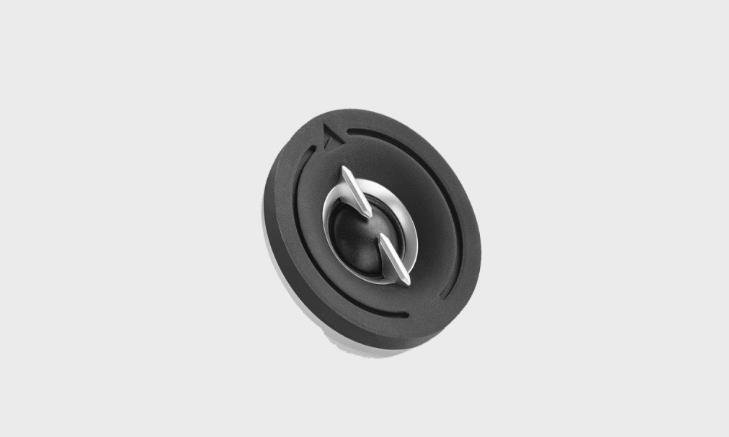
To achieve balanced sound across all frequencies, speakers use multiple drivers. Each driver handles the frequency range it is designed for. A crossover ensures each driver receives only its designated frequencies.
Understanding Speaker Impedance
Speaker impedance is the total resistance to electrical current flow in a speaker, measured in ohms. Impedance includes both the resistance of the voice coil wire and the inductance caused by the coil winding.
Unlike standard resistance, inductance changes with signal frequency. This variation is called inductive reactance.
Matching speaker impedance to amplifier impedance is important for optimal performance. Mismatched impedance can result in reduced sound quality, overheating, and equipment damage.
Always verify that speaker impedance is compatible with your amplifier specifications.
Speaker Power and Sensitivity
Many people assume higher wattage means louder sound. This assumption is incomplete.
A better comparison metric is sensitivity. Sensitivity, measured in decibels (dB), indicates how efficiently a speaker converts electrical energy into sound. Higher sensitivity means the speaker produces more sound with a given amount of power.
Sensitivity ratings provide fair comparison between different speakers. However, when using an external amplifier, you must also consider power handling—the maximum electrical power a speaker can receive without damage. Match amplifier output to speaker power rating.
Choose high sensitivity for applications where energy efficiency is important (portable speakers, car audio systems). Choose higher power capacity for professional audio applications.
Frequency Response
Frequency response describes a speaker's ability to reproduce sound across different frequency ranges. A frequency response graph shows frequencies where the speaker may overemphasize or underperform.
Frequency response is important for two reasons. First, it is necessary when designing multi-driver systems and configuring crossovers. Second, it helps you select the correct speakers for your specific needs, whether professional studio work or home listening.
Many consumer speakers are tuned with a slight boost at low and high frequencies to enhance listening experience. However, music production requires speakers with flat frequency response. Flat response ensures that no instrument or sample is masked by frequency dips or artificially boosted by frequency peaks.
Speakers with flat frequency response provide accurate sound that closely reflects the original audio source, which is necessary for precise mixing and mastering.
Headphones
Headphones use the same technology as speaker drivers but at a smaller scale. They are small speakers that sit on or inside your ears, delivering sound directly to the listener.
How Stereo Speakers Work
A single speaker plays sound in mono. To create a full stereo soundstage, you need two speakers, each transmitting left and right audio signals and positioned to create a wide sound environment.
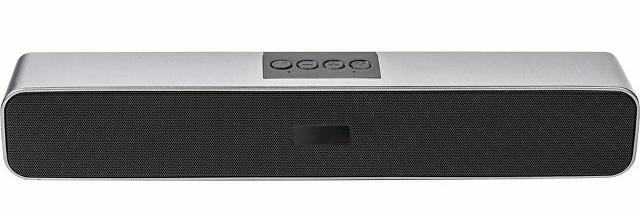
Soundbars create stereo output using multiple drivers arranged across the cabinet. The stereo signal is split into left and right channels, and each driver receives its designated portion to create a wider stereo image. These systems often include a separate subwoofer for low-frequency reproduction.
The History of Speaker Development
Like many early 20th century inventions, the loudspeaker was developed by multiple inventors over time as understanding of sound waves and electrical currents improved.
Alexander Graham Bell, inventor of the telephone, made significant contributions to audio technology, developing an early version of a loudspeaker in the late 19th century. Oliver Lodge created the first moving coil speaker. In 1915, Danish engineers Peter L. Jensen and Edwin Pridham patented the electrodynamic speaker, where a wire coil attached to a diaphragm was placed in a magnetic field.
In 1925, Edward W. Kellogg and Chester W. Rice developed the dynamic loudspeaker with a diaphragm, which was later licensed by RCA. Their design included many elements that form the foundation of modern speaker technology.
Multiple engineers contributed to the development of the technology that allows high-quality audio reproduction today.
The Future of Speaker Technology
Speaker core technology has remained largely unchanged since its invention. Speakers are inefficient converters of energy—over 99% of input energy converts to heat rather than sound.
However, future speaker technology may change with graphene, a material discovered in 2004. Graphene is lightweight, requiring less energy to move and create sound waves. This property is particularly beneficial for high-frequency drivers, which require lightweight materials for efficient operation at high frequencies.
If graphene production can be scaled for commercial products, future speakers could be lighter and significantly more energy-efficient.
Key Takeaways
- Speakers convert electrical signals to sound through electromagnetic interaction between a voice coil and permanent magnet
- The diaphragm moves in response to voice coil movement, creating pressure waves we perceive as sound
- Multiple drivers of different sizes are necessary to reproduce the full frequency range efficiently
- Impedance matching between speakers and amplifiers is necessary for optimal performance and equipment safety
- Sensitivity indicates how efficiently a speaker converts electrical power into sound output
- Flat frequency response is necessary for accurate music production and mixing
- Speaker technology has remained fundamentally unchanged since the 1920s, though materials continue to improve
FAQ
A woofer is a large driver designed to reproduce low frequencies (bass). A tweeter is a small driver designed to reproduce high frequencies (treble). Each driver size is optimized for its specific frequency range due to physical limitations—small drivers cannot move enough air for bass, and large drivers cannot move fast enough for high frequencies.
Speaker impedance must match amplifier specifications to ensure proper operation, optimal sound quality, and equipment safety. Mismatched impedance can cause reduced audio quality, amplifier overheating, and permanent equipment damage.
Speaker sensitivity, measured in decibels (dB), indicates how efficiently a speaker converts electrical power into sound output. Higher sensitivity means the speaker produces more volume with the same amount of power input. Sensitivity is more useful than power rating when comparing speaker loudness potential.
Flat frequency response means the speaker reproduces all frequencies at equal levels without emphasizing or reducing specific ranges. This is necessary for music production because it ensures accurate representation of the audio source, allowing producers to make correct mixing and mastering decisions.
A crossover splits the audio signal into different frequency ranges and directs each range to the appropriate driver. For example, in a two-way speaker, the crossover sends high frequencies to the tweeter and low frequencies to the woofer, ensuring each driver only reproduces the frequencies it is designed to handle efficiently.