The Best Free VST Plugins for Music Production in 2026
Author
Patrick Stevensen
Published
December 23, 2025
The best free VST plugins in 2026 span synthesis (Vital for wavetables), drums (MT Power Drum Kit 2 for rock/pop), effects (Valhalla Supermassive for reverb), mixing (TDR Nova for dynamic EQ), and vocals (iZotope Vocal Doubler for width). These plugins match paid alternatives in sound quality while costing nothing.
Modern free VST plugins are capable of solving specific production problems expertly: your mix lacks professional depth, 808 bass needs sub-frequency weight, vocals need width without multiple takes. For Amped Studio users, VSTs expand creative options when built-in tools feel limiting — but, choose strategically, since you're working with one plugin per project.
This guide covers 15 free VST plugins tested over the years plus a few bonus picks and hidden gems.
Quick Key Takeaways
Best free synth VST: Vital (wavetable synthesis rivaling Serum)
Best free drum VST: MT Power Drum Kit 2 (complete rock/pop kit with round-robin samples)
Best free reverb VST: Valhalla Supermassive (delay/reverb hybrid with dense, smooth tails)
Best free mixing VST: TDR Nova (dynamic EQ handling mastering-grade tasks)
Best free vocal VST: iZotope Vocal Doubler (simulates double-tracking without multiple takes)
Amped Studio advantage: The only browser DAW with VST3 support (one plugin per project via VST remote)
Strategic tip for Amped Studio VST use: Bounce VST tracks to audio to free up the slot for another plugin
What Are VST Plugins?
VST (Virtual Studio Technology) plugins are software instruments and effects that run inside your DAW. Introduced by Steinberg in 1996, VST technology let third-party developers create audio tools that work with any compatible DAW. This marked the turning point in digital music technology.
There are two types: VST instruments generate sound from MIDI synths, samplers, drum machines), VST effects process audio (compressors, EQs, reverbs, delays, etc). The latest VST3 version improves on VST2 by only processing when you're actually using it, reducing CPU load. Most modern DAWs support VST3, including Amped Studio — the only browser DAW with VST support.
Vital rivals commercial synths like Serum — but it's free. This wavetable synth gives you spectral warping, drag-and-drop modulation, and visual feedback that makes complex sound design actually approachable.
Three wavetable oscillators plus two parallel filters (with self-resonance for extra tone generation) handle everything from brutal dubstep bass to evolving ambient pads. The modulation system? Connect any source to any destination by dragging cables, menu diving not necessary.
The free version includes 25 wavetables and 75 presets. May sound limiting until you realize the synthesis engine's flexibility means you can craft entirely unique sounds from those 25 wavetables. Community preset packs add thousands more options if you want them.
Why it matters: Vital delivers professional wavetable synthesis at zero cost. If you’re looking for modern electronic textures, this is a great place to start.
Surge XT went from paid software to open-source in 2018 and became something better. This free synth VST plugin gives you multiple oscillator modes (wavetable, FM, window, alias) and 22 filter types spanning classic analog to modern digital designs.
The modulation system is where it gets serious. Eight LFOs, two envelopes, and a step sequencer can modulate over 100 parameters — and the modulation depth itself can be modulated. That's how you build evolving textures that stay interesting.
Sound designers love Surge XT because it handles brutal FM bass and lush analog pads equally well. The MPE support enables expressive performance with compatible controllers. Why it matters: Free open-source usually means compromised. Surge XT proves that wrong.
TyrellN6 by u-he emulates the Roland Juno series — that warm, lush analog sound from '80s synth-pop and new wave. Two oscillators (saw, pulse, sub) plus the Juno-60's resonant lowpass filter give you classic analog sweeps, thick bass, and those iconic pad sounds that layer beautifully without fighting for space.
The built-in chorus effect is the secret weapon here. The Juno's chorus defined an era — TyrellN6 recreates it perfectly, adding width and movement to single-oscillator patches. Push the filter resonance high and it self-oscillates into sine tones. The sub-oscillator reinforces low end for bass that actually hits.
Perfect for producers chasing '80s vibes or anyone who needs warm pads and cutting leads without the harshness digital synths sometimes deliver. Simple interface means quick sound design, no complex routing headaches.
Bonus Synth Hidden Gem
Rare Vintage Synth Emulations by Full Bucket Music
Full Bucket Music website screeshot: free rare vintage synth VST emulations
For vintage synthesizer enthusiasts, Full Bucket Music offers meticulously crafted emulations of obscure hardware synthesizers. Rather than recreating widely known instruments like the Minimoog or Prophet-5, Full Bucket specializes in deeper cuts from synthesizer history.
These emulations capture rare synths you don’t see namedropped as often — circuit-accurate modeling of quirky instruments that filled prog rock B-sides, early disco records, and forgotten TV soundtracks from the '70s. The sounds feel genuinely vintage without being the same tired "analog warmth" presets you've heard a thousand times.
Spitfire Audio's LABS Soft Piano captures a grand piano with close-mic placement, giving you intimate sound that feels like the player's in the room with you. The sampling prioritizes feel over stats — velocity layers respond naturally to playing dynamics, and the release samples get that resonance right when you lift the sustain pedal. Works beautifully for ballads and ambient stuff where you need the piano present but not dominating. The close-miked character means you can skip the usual EQ wrestling match.
The interface is dead simple: one expression knob, some reverb, done. The real draw here is Spitfire's LABS platform itself — grab this piano for free, then explore their orchestral and experimental instruments. You'll find yourself coming back.
Micro Piano offers a completely different approach. This rompler reproduces the gritty sampled piano sound from '90s rave and piano house. Controls and effects are sparse, but it’s all about that sound: crunchy digital yet iconic, perfect for driving hands-in-the-air staccato chord progressions of piano house and early rave tunes. It’s a total vibe fit for classic house revival, UK garage, breakbeat, or anything chasing that '90s dancefloor energy.
MT Power Drum Kit 2 gives you a complete rock/pop drum kit recorded with multiple velocity layers and round-robin samples. The kit includes everything — kick, snare, three toms, hi-hat, crash, and ride — with individual mic treatment for each piece. The built-in mixer handles volume, pan, and basic EQ, while the visual interface makes drum selection intuitive.
MIDI mapping follows General MIDI standards, so it works with whatever you throw at it. Perfect for rock, pop, and indie tracks, one of the best free drum kit VST plugins, especially for drums that sit naturally in guitar-based arrangements.
Poise by One Small Clue brings MPC-style workflow to your DAW. Load loops into 16 pads, and the slicer auto-detects transients and maps them for you. Each pad gets independent tuning, filtering, and envelope controls, plus built-in delay, reverb, and bit reduction.
The workflow encourages the good kind of accidents — import a loop, slice it, rebuild the groove your way. Multi-output routing lets you send individual sounds to separate mixer channels. If you're making hip-hop or electronic music and miss the tactile feel of hardware samplers, this gets you there.
Valhalla Supermassive blends delay and reverb into something more interesting than either alone. The algorithm creates dense, smooth tails that sit in mixes without turning everything to mud. Use short settings for subtle doubling, long decays for massive ambient washes, or push the modulation for chorus-like movement.
The "warp" control morphs between reverb characters on the fly. Presets range from practical ("Medium Hall") to experimental ("Cosmic String Theory"). Perfect for synths, guitars, and vocals and anything else that needs added space with personality.
Ambience by SmartElectronix is the workhorse reverb that's been around forever for good reason. Clean algorithmic reverb without digital harshness, covering rooms, halls, plates, and chambers through the factory presets. Independent control over pre-delay, reverb time, room size, and damping lets you dial in exactly what you need.
iZotope Vocal Doubler simulates double-tracked vocals without recording multiple takes. The algorithm splits your signal and applies subtle pitch and timing variations to left and right channels while maintaining phase coherence for mono compatibility. Works beautifully on lead vocals for subtle width without losing center focus, or give backing vocals that extra-wide texture in the background without fighting for space. One knob control offers great accessibility and user experience.
T-De-Esser 2 by Techivation tames harsh sibilance without creating that artificial lisp you get from aggressive de-essing. The plugin detects sibilant frequencies automatically and attenuates them while preserving the air and presence in your vocal tone. You know that grating "S" sound that gets worse after vocal compression? This fixes it. The interface stays minimal: visual feedback shows when it's working, and the sharpness control adjusts sensitivity.
Graillon 3 Free Edition by Auburn Sounds handles everything from transparent vocal tuning to full T-Pain robotic effects. The speed control determines how fast corrections snap — crank it for hard auto-tune, dial it back for natural pitch correction. The pitch shifter transposes by semitones or cents while the formant shift keeps vocals sounding human during pitch changes, perfect for generating harmonies or thickening vocals. There are multiple pitch engines with coloring variations to choose from.
Subdivine Lite is your 808 sub-bass toolkit when you need actual low-end weight, not just mid-range punch. Six presets span smooth 808 kicks to heavy trap subs — the kind that rattle car doors and make apartment neighbors complain — defined transients and clean sub-40Hz frequency content.
Adjustable drive adds grit, ADSR shapes your envelope, and pitch bend handles those sliding basslines that define modern hip-hop and trap production. If you're making beats and wondering why your bass doesn't hit like the tracks you reference, this is probably the missing piece. Simple interface, no menu diving, just chest-rattling frequencies.
Ample Bass P Lite is a free bass guitar VST plugin that gives you a sampled Fender Precision Bass — the model that's anchored more hit records than any other bass in history. There's a reason: it sits in that low-mid pocket where you get punch without turning the mix to mud.
Multiple articulations (hammer-ons, slides, pops, slaps) mean you can program bass parts that sound like an actual human played them, not a MIDI piano roll quantized to the grid. Requires Kontakt Player, but Native Instruments hands that out free. Two downloads instead of one. Worth it if you're tired of synth bass pretending to be a bass guitar.
Kilohearts Essentials gives you 30+ individual effect plugins — distortion, filter, compressor, reverb, delay, etc. Each Snapin (that's what they call them) works standalone with dead-simple interfaces very high-quality DSP, and well-curated presets. In my own music production journey over the years, many of Kilohearts’ individual plugins delivered great results quickly after trying just a few well-configured stock presets.
Killer feature (and perhaps a topic for separate discussion) is an option to combine these individual snap-ins into a powerful multi-effects unit. But here’s the catch: that will not be free. So, give the individual effects a try, and if you love them so much that you wish you could create one big pedal board out of all of them, consider the paid Multipass or Snap Heap options. Those can make a very powerful multi-fx tool, which would be strategic for use in Amped Studio with its one-VST-plugin-per-project limitation.
TDR Nova by Tokyo Dawn Labs is a dynamic EQ that comes to the rescue when static EQ can't solve the problem. Four bands can work like regular EQ or switch to dynamic mode, compressing or expanding specific frequencies only when they cross your threshold — perfect for surgical EQ fixes. That resonance at 3kHz that only shows up when the vocalist belts? Tame it without killing the air around it. Harsh sibilance? Handle it dynamically instead of carving out frequencies that sound fine 90% of the time.
The parallel processing mode is the secret weapon — blend wet/dry to fix problems without making the whole track sound processed. For Amped Studio's one-VST limit, this handles EQ, compression, de-essing, and mastering duties in a single plugin. A real audio processing swiss army knife.
DC1A by Klanghelm is two-knob compression that delivers exceptional quality for a free plugin. Input drives signal in, output adjusts level out. That's it. Ratio and release adapt automatically based on what you feed it, so you can't really screw it up even if you try.
Two modes: Deep for slower, musical glue, Relaxed for faster transparency. The compressor adds subtle harmonic color even without crushing dynamics — that's the analog-style behavior people pay hundreds for in other plugins. Put it on your mix bus when things feel disjointed. This may well be your only VST in Amped Studio if you want one plugin that improves the overall sound and texture of your entire project.
Using VST Plugins in Amped Studio
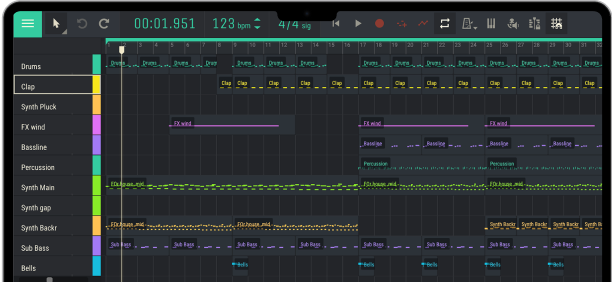
Amped Studio supports VST3 plugins through its VST remote bridge, bringing professional third-party tools to browser-based production. Understanding how to maximize this single-plugin slot requires strategic thinking.
Important Note: Amped Studio currently supports one VST plugin at a time due to limitations of browser web audio architecture.
Accessing VST Support
In Device Chain, click "+Add Devices" → select "VST/Remote Beta"
Download and install VSTremote (one-time setup)
VSTremote auto-detects your installed VST2/VST3 plugins
Plugins appear in the VST/Remote device selector
Loading and Using VST Plugins
Click "Select plugin" in the VST/Remote device
Choose your plugin from the list
Plugin loads and is ready to use
Only one VST can be active per project. You can add multiple VST/Remote devices, but only one stays active
Strategic Tips for One-VST-Per-Project
Use VSTs for tasks Amped Studio's built-in tools can't handle
Bounce VST tracks to audio once recorded to free up the slot for another plugin
Mastering plugins like TDR Nova or DC1A will affect the entire mix when added to the master channel. In our opinion, this could be the best scenario providing the most impact in terms of improving overall sound quality and adding final polish to your project.
Here's the honest truth about using VSTs in Amped Studio: you're trading some convenience for creative firepower.
Amped Studio's core appeal is radical portability. But the moment you add VST plugins, you're noticably sacrificing that. Switch computers? You'll need to reinstall those plugins. That fully self-contained ecosystem advantage? Basically almost gone.
So why bother?
If you're just starting out and Amped Studio's built-in instruments cover your needs — stick with those. But if you're a dozen projects deep and start thinking that you need something more — that's when VST support becomes an appealing solution. You've outgrown the starter toolkit and you need more specialized tools.
Amped Studio pioneered VST support among browser DAWs back in 2020, and as of 2026, it remains the only active browser-based platform offering VST3 integration. That's not hype — competitors either tried and abandoned it, or never attempted it in the first place.
Think of VST support as Amped Studio's "advanced" option. Beginners get instant creative gratification without setup friction. Intermediate and advanced users get expansion options when built-in tools become limiting.
And the single-plugin-per-project constraint makes you think which plugin delivers maximum impact rather than exploring endless options. Limitations that force strategic thinking are usually, in our opinion, a good thing for creativity.
FAQ
VST plugins extend your DAW's capabilities. VST instruments generate sound from MIDI input, VST effects process audio. The VST standard lets third-party developers create tools that integrate with any compatible DAW. VST3 offers improved performance over VST2.
Try Vital for synthesis — its visual feedback makes learning intuitive. TDR Nova for mixing — great at harnessing EQ and dynamics in one plugin. Valhalla Supermassive for reverb — instant professional results for adding space to your sounds. Choose based on immediate needs, not collecting plugins.
Yes, with caveats. Vital sounds astonishingly close to Serum for wavetable synthesis — you get fewer presets and wavetables, but the synthesis engine is the same quality. TDR Nova handles professional mastering work that costs $200+ in other plugins. The catch: free plugins may have smaller preset libraries, and may not be updated as frequently. Sound quality? Nowadays, frankly, often (near) identical.
Author
Patrick Stevensen
Published
December 23, 2025
VST plugins
Make Music Now.
No Downloads, Just
Your Browser.
Start creating beats and songs in minutes. No experience needed — it's that easy.