Classic House Drum Patterns: How to Make a House Beat

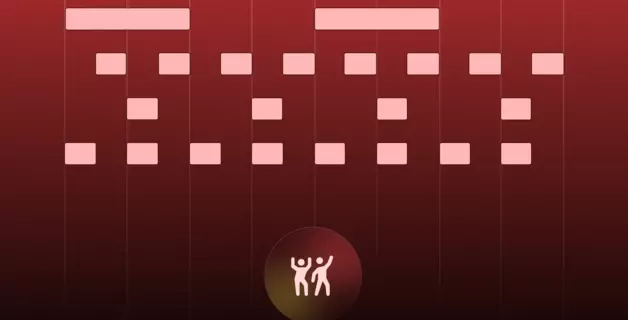
House drum patterns are built on a four-on-the-floor kick, a clap or snare on the backbeat, and hi-hats filling the space between. That is the skeleton. What brings the groove to life is what you layer on top: percussion with velocity variation, shuffle to create bounce, and syncopation to add that jacking feel. Every technique in this guide applies to house music drum loops across the genre, from 90s deep house to modern lo-fi house revivals. This guide covers drum beat making for house music from the ground up, starting with a single kick and building one groove from scratch.
What Every House Beat Is Built From
The four-on-the-floor is one of the most common drum beats in electronic music. Disco, techno, and trance all use it. What makes it specifically house is what happens around that kick: the balance between the steady elements (kick and snare, always in the same place) and the rhythmic variation layered on top (hats and percussion, where all the groove decisions happen). That balance is what this guide teaches you to build.
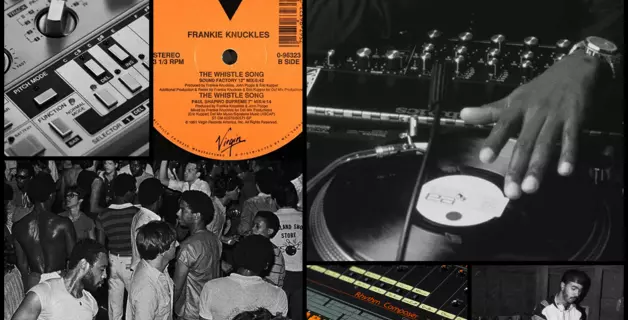
If any single drum machine defines the sound of house music, it is the Roland TR-909. Its sounds have appeared on house records continuously since the genre began in Chicago and remain the go-to reference for producers today. You do not need the original hardware. In the walkthrough below, we load a house preset in Drumpler built from sounds in that tradition.
Building a Classic House Beat Step by Step
Step 1: Choose your drum kit. Open a drum machine and load the “House” preset. Most other 909 derived kits will also work great for classic house sound.
Step 2: The kick. Place a kick on every quarter note: positions 1, 5, 9, and 13 on a 16-step grid. Keep the velocity identical across all four hits. This steady, even pulse is the four-on-the-floor beat, the foundation of all house music.
Step 3: The snare. Add a snare on beats 2 and 4 (positions 5 and 13).
Step 4: Hi-hats on the offbeats. Place hi-hats between the kicks: positions 3, 7, 11, and 15. These sit right in the middle of each gap between kicks. The push and pull between kick and offbeat hats is what gives the four-on-the-floor drum pattern its forward motion. At this point you already have a basic house beat. Kick, clap, offbeat hats, completely straight. This pattern is the foundation of house and a large part of EDM.
Step 5: 16th-note percussion. Add a shaker or percussion sample on every remaining 16th-note position (everywhere the hi-hat is not playing). This fills out the rhythmic texture and is characteristic of house drum loops.
Now vary the velocity. Mixing louder and quieter hits across the 16th-note percussion brings the pattern to life, closer to how live-played percussion sounds.
Step 6: Shuffle. Shuffle (also called swing) delays every other 16th note, turning a straight repetitive rhythm to a bouncy shuffled one. This is a key house music production technique that gives this genre its distinct sound and turns a stiff beat into one that feels alive.
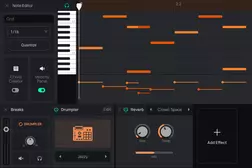
In Amped Studio's Note Editor, open the Grid menu and set it to "1/16 60% sw". You will see the grid lines shift on screen. Now drag your percussion notes to snap them to the new positions and hit play. The result is a shuffle drum pattern with a distinctly house bounce. The shuffled percussion provides the groove. That interplay between steady and uneven is what makes a house beat feel like a house beat.
Once you have this swing drum beat, let’s take a look at a few more advanced techniques that will help us develop it further.
Step 7: Adding rhythmic variation.
Syncopation creates a cross-rhythm against the straight four-on-the-floor kick. The kick places hits four steps apart on the 16th-note grid. Syncopated patterns break that regularity by counting in threes instead of fours. Add a rimshot: place a hit, count three steps, place the next. Not every hit needs to follow that rule strictly. What matters is that most of your hits land between the kicks rather than on them. That rhythmic tension is the principle behind jackin house drums, from 1980s Chicago through today.
You can also add depth to the groove with ghost notes. Add a few extra kicks on offbeat positions and bring their velocity down to 25-35%. Experiment with placing ghost notes of different drum hits on the offbeats or right before the downbeats. Even the most basic four-on-the-floor pattern gains a noticeable groove from a few well-placed ghost drum notes.
From One Drum Loop to an Arrangement
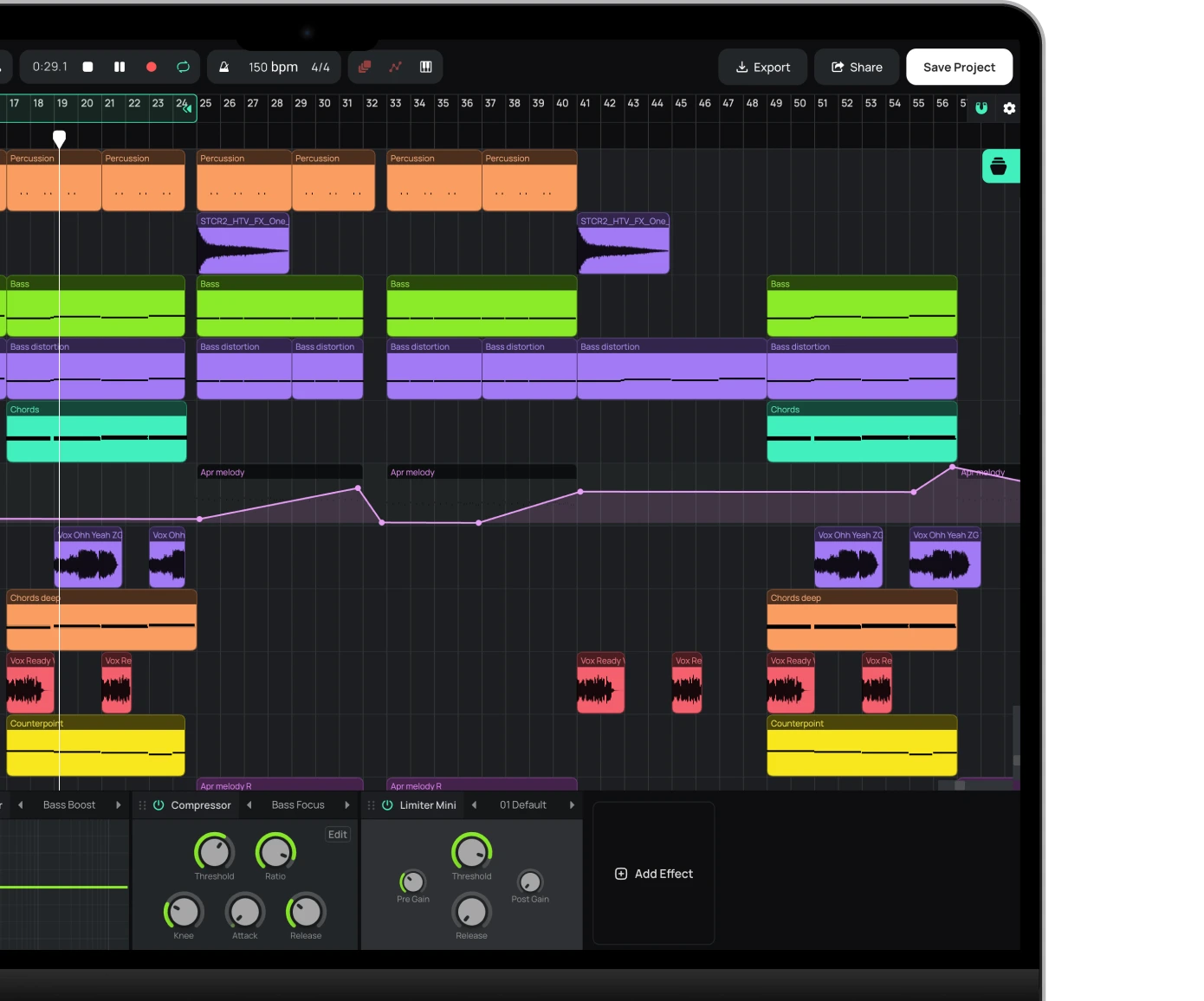
A single house drum loop is a starting point. Here's a few pointers how to develop a simple 8-bar drum beat towards a full track.
Adding rides for intensity. Duplicate your loop and add a ride cymbal on the offbeats in the copy. Introducing the ride later in the track creates a sense of building tension without changing the core pattern. Making these types of variations of the initial beat is the fastest way to develop loop-based arrangements.
Fills at the right intervals. Drum fills usually work best at the end of 8 or 16 bars, not 4 (that can make the arrangement feel busy and restless). To build a fill: duplicate your loop, merge the copies into one clip, and add a snarefillin the last beat of the final bar. A great use of drum fills in an arrangement is make the signal a transition: from intro to main section, from buildup to drop, from one part of the track to the next.
Syncopated bass. The straight four-on-the-floor kick creates a steady anchor. A bass line sitting between the kicks with notes spaced in threes rather than fours adds a funky counterpoint. You do not need a complex bass line – two or three well-placed notes per bar will do. What matters is that they land between the kicks, not on them. The syncopation carries the groove more than the notes themselves.
Chord syncopation. A chord hit or stab on an offbeat position is a signature house move. Try placing it right before or after the fourth kick and listen to how it sits. A well-placed single chord stab contributes as much to the groove as it does to the harmony.
FAQ
Place a kick on every quarter note at 120-128 BPM. Add a clap on beats 2 and 4, hi-hats on offbeats, and 16th-note percussion with velocity variation. Apply shuffle for bounce and syncopated snares for a jacking feel. That covers the essentials of how to make a house beat.
The four-on-the-floor beat places a kick drum on every quarter note in a 4/4 bar. It creates a steady pulse that is the foundation of house, disco, and most electronic dance music. The name refers to the bass drum pedal hitting the floor on every beat. All house music drum loops use this kick pattern regardless of subgenre.
A typical house drum beat sits between 120 and 128 BPM. Classic and deep house tends toward 120-124, while tech house pushes closer to 126-128. Tempo determines how much rhythmic space you have for hi-hat and percussion detail. Slower tempos leave more room for shuffle and complex patterns.
Syncopation means placing drum hits where they do not align with the main beats. In house, syncopated snares or rimshots create a cross-rhythm against the four-on-the-floor kick. The simplest method: place hits every 3rd position on a 16th-note grid while the kick hits every 4th. The two rhythms pull against each other and produce the jacking feel heard in Chicago house.
Swing delays every other note in a subdivision. On a straight grid, notes are evenly spaced. With swing, offbeat notes arrive later, creating a bouncy, lopsided feel. The amount of swing defines the groove's character. No swing suits more driving EDM styles. Heavy swing creates the head-nodding bouncy feel behind shuffle drum beats of the 90s house revival and lo-fi house.
The Roland TR-909 and TR-808 are the defining sound of house drums. Their kick, clap, and hi-hat sounds appear in the vast majority of house tracks from the genre's origins through today. Most DAW kits for house are 909 and 808 derivatives. Any house drum loops or kits in that sonic family will work for building classic house drum patterns.
Start creating beats and songs in minutes. No experience needed — it's that easy.
Get started