How to Cut Audio: Complete Guide to Trimming Music Audio Files

You’ve recorded a voice memo with rambling at the start. Your favorite song has a 30-second intro you’d rather skip. A podcast episode needs tightening up before publishing. Whatever brought you here, learning how to cut audio is a fundamental skill that saves time and improves your final output. From websites that let you cut audio online to full-featured digital audio workstations, you can handle everything from creating custom ringtones to preparing broadcast-ready podcasts.
This guide covers free online tools, desktop software, and professional browser-based solutions. By the end, you’ll know exactly which method suits your needs and how to cut an audio file professionally every time.
For those seeking a powerful yet accessible solution, Amped Studio combines professional editing features with browser-based convenience — no installation required.
Understanding Audio Cutting Basics
Audio cutting, trimming, and cropping all refer to removing unwanted sections from audio files. Most people need to cut audio for practical reasons — creating ringtones from favorite songs, removing mistakes from voice recordings, or shortening tracks to fit specific time requirements.
Whether you need to edit audio clip content for podcasts or edit mp3 audio files for personal use, the process typically involves loading an audio file into an editor, selecting the unwanted section, deleting or extracting the desired portion, and exporting the edited result.
You can crop mp3 files as well as other formats like WAV, FLAC, and OGG with these cutting tools. Quality loss depends on the tool and export settings — lossless formats like WAV maintain original quality, while compressed formats like mp3 may introduce slight (not always noticeable) degradation during re-encoding.
Cut Audio Online: Dedicated Online Platforms
Online audio trimmer tools eliminate software installation and work directly in your browser. These free solutions handle quick edits and simple trimming tasks without cluttering your hard drive.
Audio Trimmer
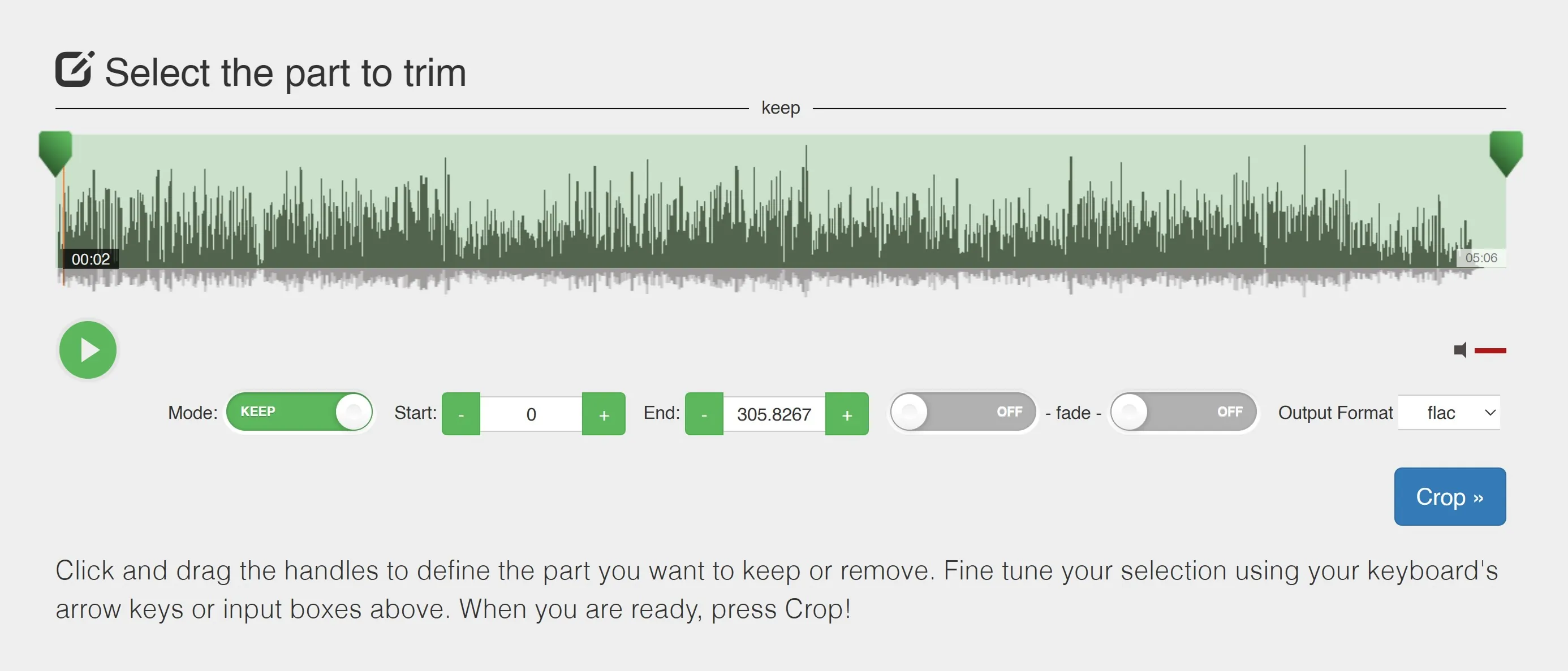
This online tool strips audio cutting down to bare essentials. Upload your file, drag handles to mark the section you want, and crop. The interface contains no distractions — just the controls you need.
The tool processes files server-side and automatically deletes them within two hours. Fade in and fade out effects smooth abrupt starts and endings. For creating ringtones, select the M4R format for iPhone or keep the original audio format for Android devices.
Best for: Single, straightforward cuts when you need results fast.
VEED.IO
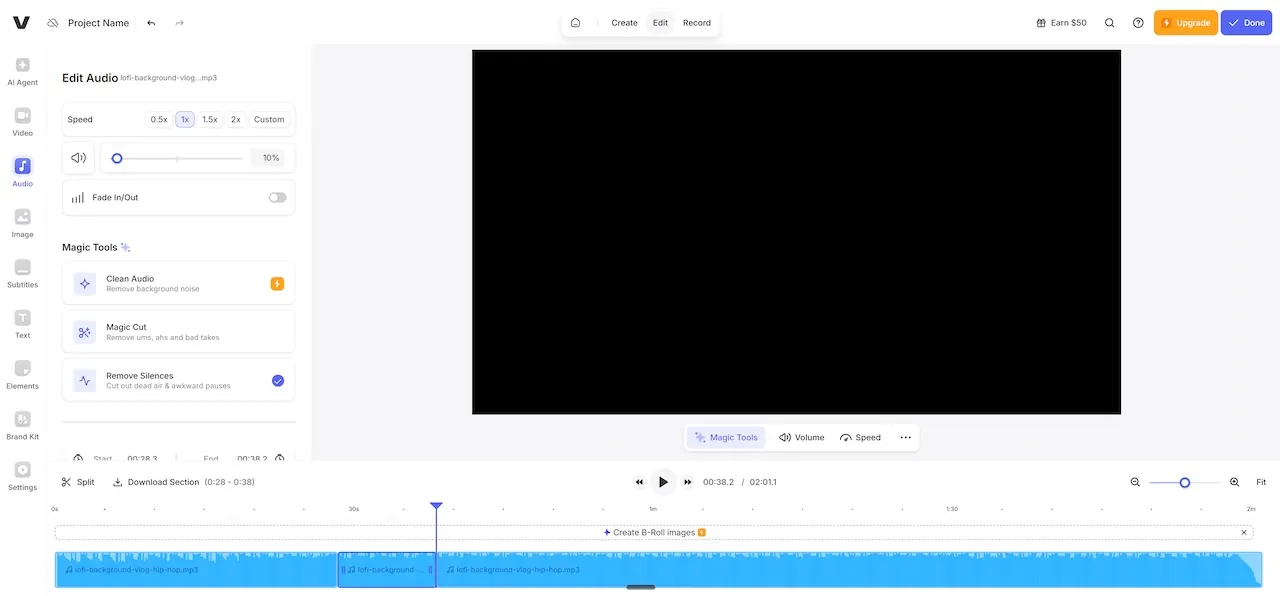
VEED.IO positions itself as a video editor that excels at audio work. The split tool lets you click anywhere on the timeline to divide audio into segments, then delete unwanted sections with precision.
The standout feature is one-click AI audio cleaning (premium feature), which removes background noise from recordings — particularly useful for voice recordings done in less-than-ideal environments. Since VEED.IO doubles as a video editor, it makes sense for content creators who need to trim audio online as part of video production workflows.
Best for: Video creators who need audio trimming integrated into their editing process, or anyone needing AI noise reduction.
Trim Audio with Desktop Software
Desktop applications offer more power and flexibility than browser tools. They work offline, handle larger files more efficiently, and provide advanced features for detailed editing work.
Audacity
Audacity remains the gold standard for free audio editing. This open-source powerhouse runs on Windows and on Mac, offering professional-grade capabilities without the professional price tag.
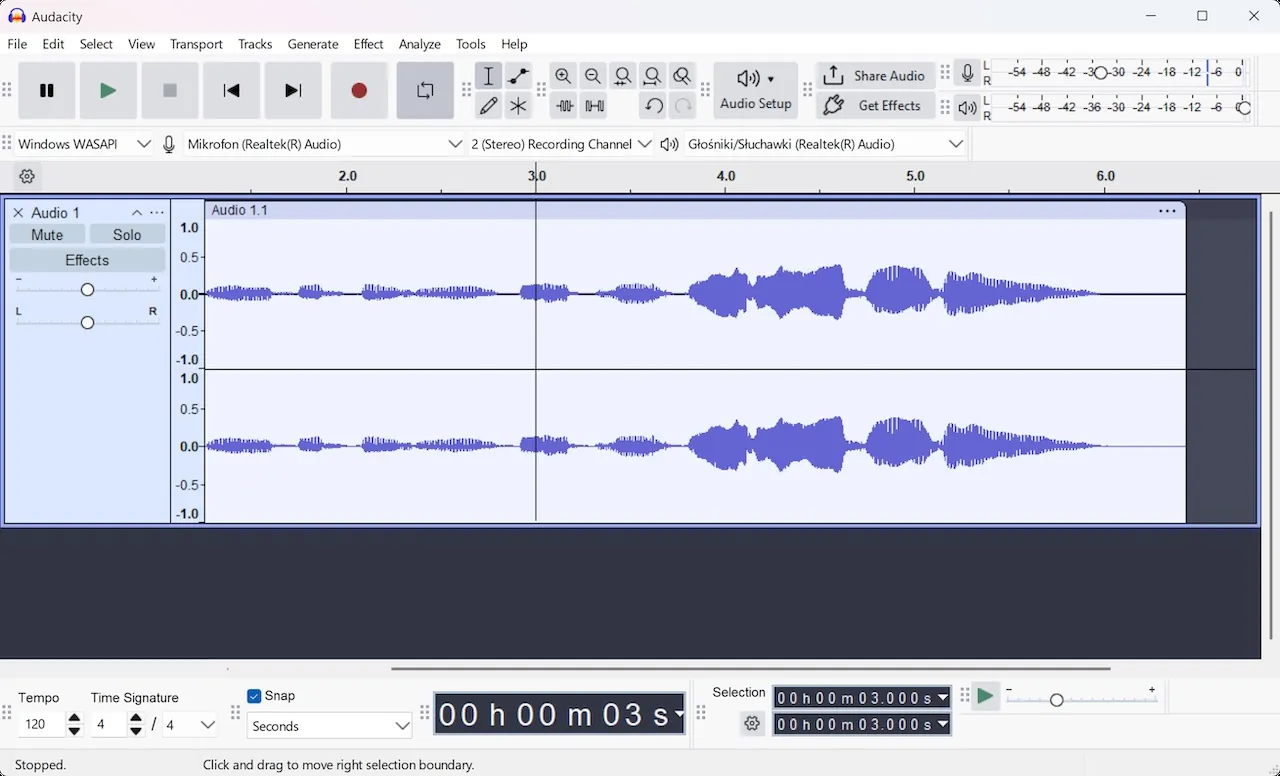
Audacity supports multi-track recording and editing, extensive plugin libraries, noise reduction, and spectral editing. If you’re figuring out how to trim an audio file, the process is straightforward: open your audio file, select the section you want to remove or keep, and use the trim or delete function. Export the edited file in your preferred format.
The learning curve is moderate — the interface hasn’t changed much in 20 years, which means abundant tutorials exist but the design feels dated compared to modern alternatives.
Best for: Podcasters, voice actors, and anyone needing advanced editing features for free.
Ocenaudio
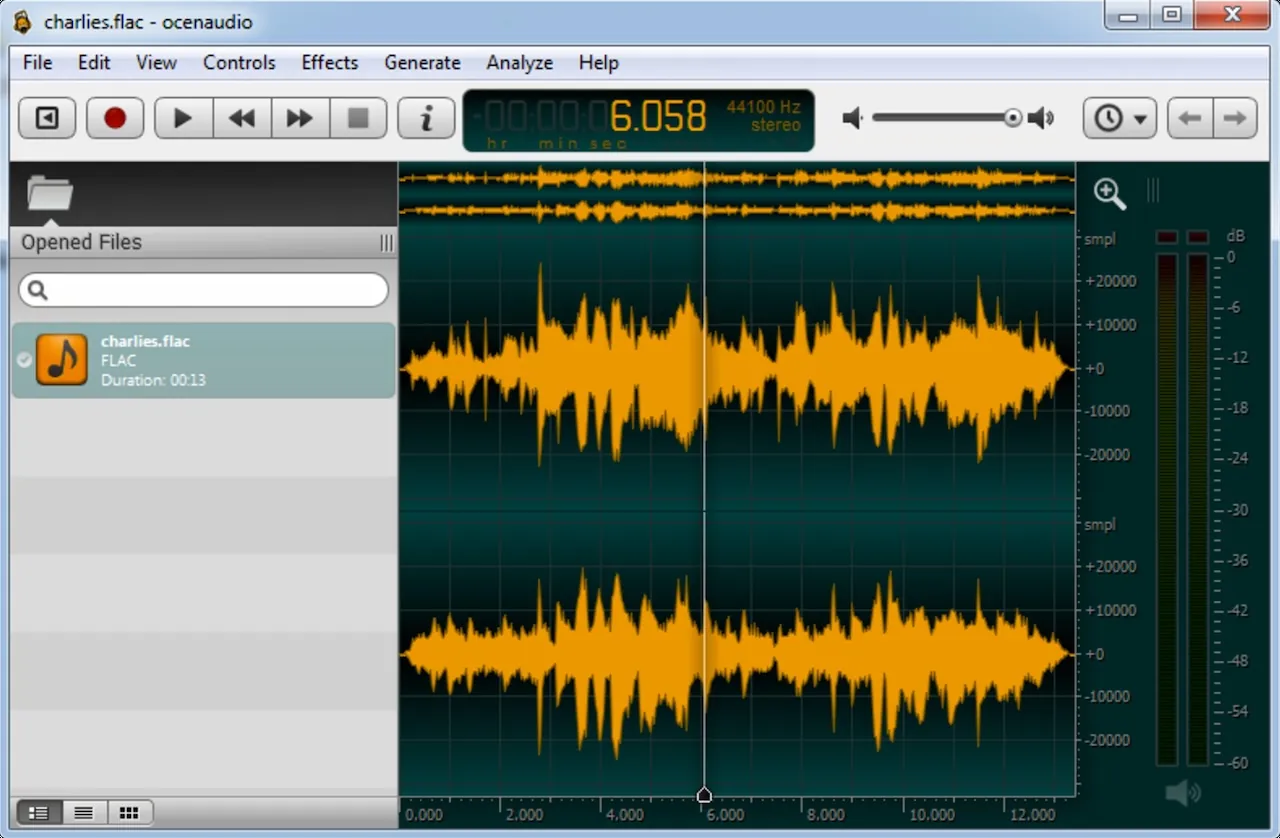
Ocenaudio offers a modern alternative to Audacity with a cleaner interface and faster performance. The application feels native to your operating system rather than a cross-platform compromise.
The interface is simpler and more streamlined than Audacity, making it easier for beginners while maintaining the power advanced users need. Performance stays responsive even with multiple large files open.
Best for: Users who want Audacity’s power with a more intuitive, modern interface.
The Best Way to Cut Music: Amped Studio
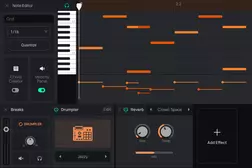
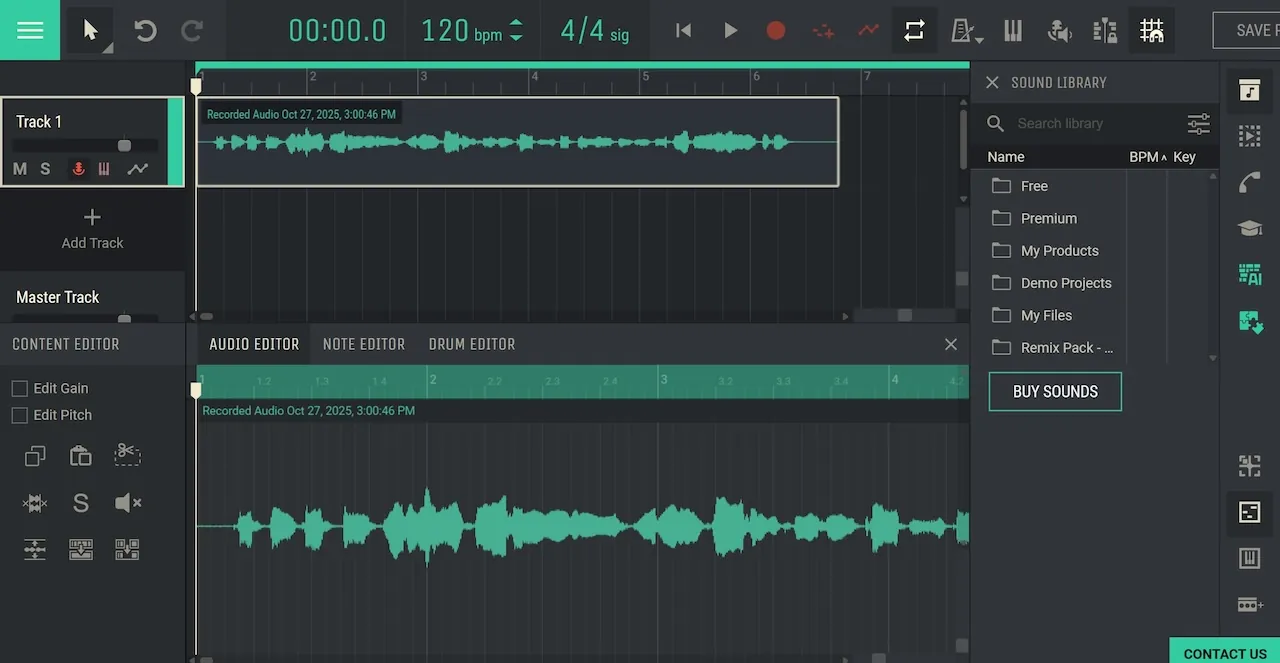
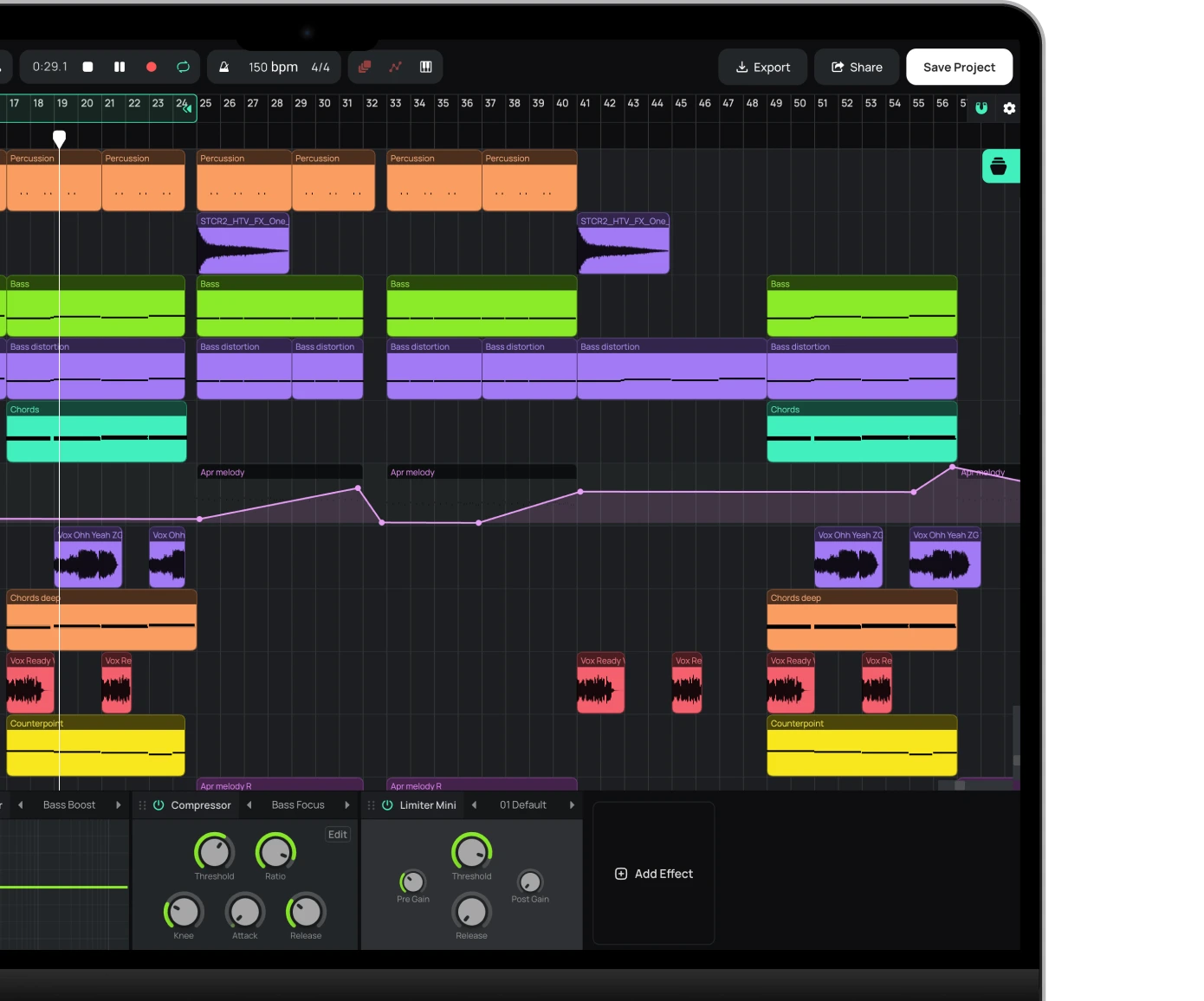
Amped Studio operates as a complete online DAW in your browser, offering the best of both worlds: browser-based convenience meets professional capability. No installation, no system requirements beyond an internet connection, and access to advanced tools typically reserved for desktop DAWs like FL Studio or Pro Tools.
Work from any computer — your home setup, a friend’s laptop, or a library computer — and access your projects instantly. The learning curve stays gentle for beginners while offering depth for advanced users.
Step-by-Step: How to Cut Audio in Amped Studio
- Open Amped Studio in your browser and create a new project or log into your account
- Import your audio file: Click the menu icon → Import Audio File, or drag the file directly into the arrangement view
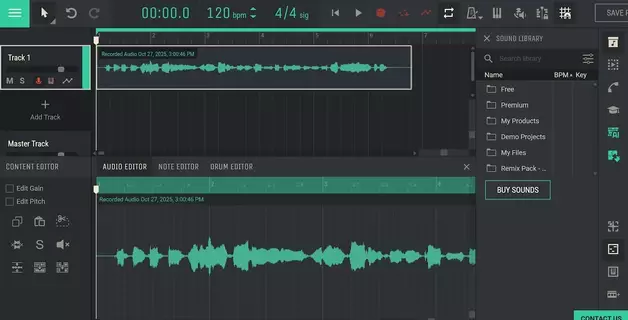
- The audio appears as a region on the timeline with its waveform displayed visually
- Select the Scissors tool from the top toolbar (or press S)
- Click on the waveform where you want to make a cut — the audio splits into two separate regions
- Select the unwanted region by clicking it, then press Delete to remove it
- For trimming the edges without cutting, drag the edges of the audio region to adjust its start and end points
- Preview your edit by pressing the spacebar to play the timeline
- Apply fade automation (if desired): Click the automation icon on the track panel → select Volume → draw fade curves by clicking and dragging on the automation line
- Export your edited audio: Menu → Export Audio → choose mp3 (free) or WAV (Premium subscription required) → select Export
Pro Tips: Beyond Basic Cutting
Unlike simple online trim tools, Amped Studio is a complete production environment. This matters because clean cuts may require a bit more than just quickly deleting unwanted sections.
- Zoom in before cutting. Use Ctrl/Cmd + scroll (or the zoom controls) to get a detailed view of your waveform. Precise cuts at the right moment prevent clicks and pops at edit points.
- Use the Trim Silence tool. For recordings with dead air at the beginning or end, select the audio region and apply the Trim Silence function from the audio editor. It automatically removes silence, saving manual work.
- Fade automation creates smooth volume transitions. Rather than abrupt starts and stops, draw volume curves that ease in and out. This makes cuts sound intentional rather than jarring — especially important when removing sections from the middle of recordings.
- Save As to preserve originals. Before making major edits, use File > Save As to create a new version. Your original project remains intact for reference or revision.
- Effects processing polishes cut points. Add subtle reverb to maintain natural room tone when cutting voice recordings.
- Use unlimited undo. Amped Studio’s undo history means mistakes don’t matter. Try different cut points, compare results, and revert instantly if needed.
Access to additional tools like these may turn obvious cuts into seamless pro-level edits. For users who need more than basic trimming, Amped Studio delivers professional results without professional complexity or cost. You can cut mp3 music online with the same precision and polish as desktop software, all from your browser.
Professional Audio Editing Made Simple
Amped Studio transforms how you cut music and audio for any project. Working directly in your browser, you get professional tools without the learning curve of complex desktop software or the limitations of basic online audio trimmers.
From creating ringtones from your favorite song to producing full tracks, the platform delivers what matters most: fade transitions, effects processing, and quality exports that turn a rough cut into a polished edit. No installation required, no compromises on results — just professional audio editing accessible from anywhere.
FAQ
Start creating beats and songs in minutes. No experience needed — it's that easy.
Get started